Fence Installation
Fence Installation Cost in Florida 2026 — HVHZ Wind Ratings, Pool-Code Fencing & Why Vinyl Wins
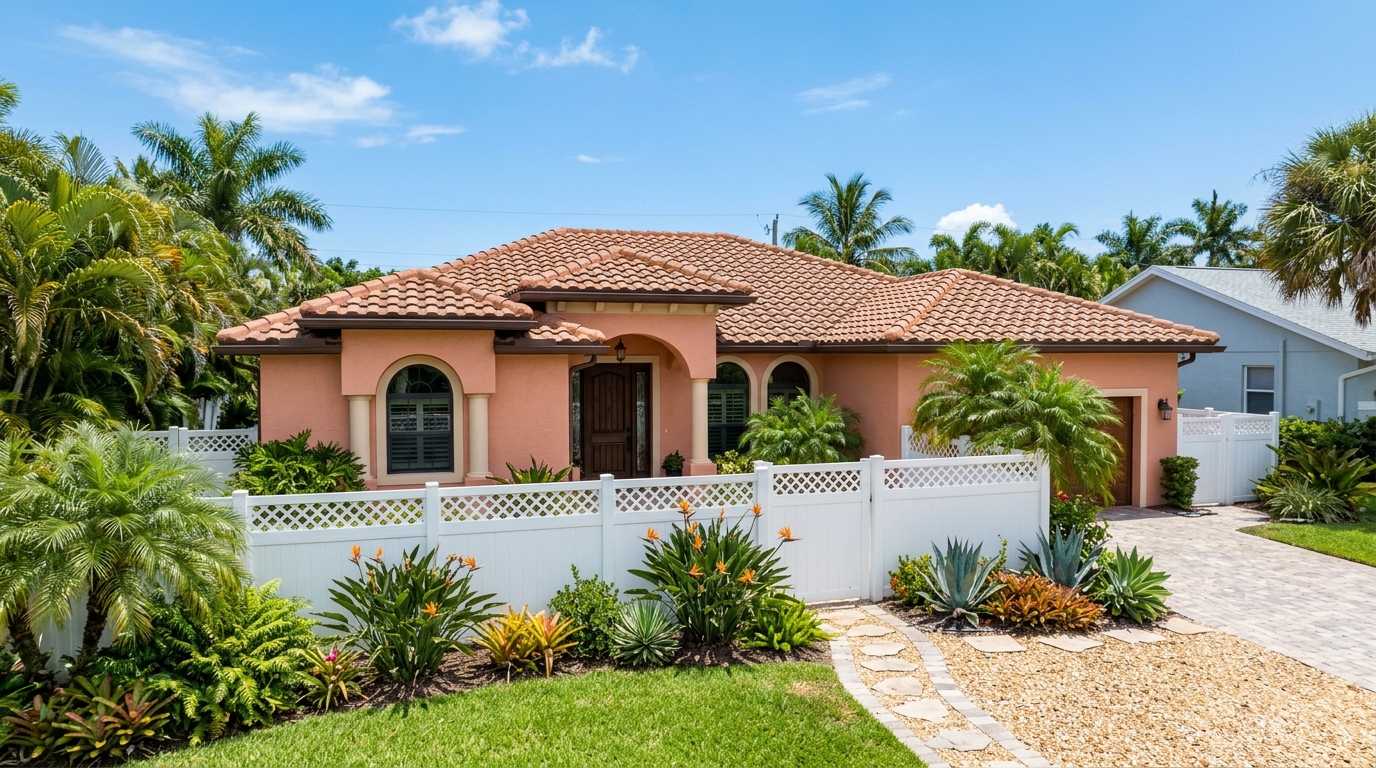
Florida fence installations run 15–35% above the national average in 2026. Two factors drive the premium: hurricane wind-rating requirements (HVHZ in Miami-Dade and Broward, Wind Zone 2 statewide), and pool-code fencing rules — Florida statute 515 requires barrier fencing around every residential pool. The good news: Florida's high vinyl-fence adoption keeps maintenance costs near zero compared to wood-heavy markets. Here's what fence install actually costs in Florida in 2026, by material and metro.
The 2026 Florida fence cost baseline (150 linear ft, 6-ft privacy fence)
- Pressure-treated wood: $5,200–$7,800. Cheapest, but 8–12 year lifespan in FL humidity. Going extinct.
- Vinyl privacy (the Florida default): $6,400–$9,800. Lifetime warranty common. Salt-air-immune. 90% of new FL installs.
- Aluminum ornamental: $7,200–$11,400. See-through (popular for waterfront views), pool-code compliant.
- PVC-coated chain-link: $3,400–$5,800. Functional, salt-resistant when coated.
- HVHZ-rated impact vinyl (Miami-Dade/Broward): $8,800–$13,400. Required in High Velocity Hurricane Zone.
- Concrete / stucco wall: $14,800–$26,000. Common in upscale subdivisions, especially South FL.
HVHZ vs Wind Zone 2 — the Florida engineering split
Florida has two distinct fence-engineering regimes, and the line runs through Broward County:
- HVHZ (High Velocity Hurricane Zone) — Miami-Dade + Broward: Fences require Miami-Dade NOA (Notice of Acceptance)-approved products, specific post embedment, and storm-rated hardware. Wind design speed: 180 mph. Adds 25–40% to fence cost vs inland Florida.
- Wind Zone 2 — rest of Florida: 130–150 mph wind design. Pressure-treated posts, concrete footings ≥ 30" deep, post spacing ≤ 6 ft. Adds 10–20% vs national average.
- "Removable lower panels" are common near the coast — lets storm surge pass through without flattening the entire fence. Some HOAs require this.
Pool-code fencing — Florida Statute 515
Every residential pool in Florida must have a barrier meeting the Residential Swimming Pool Safety Act (FL Stat 515). For fence installations on a property with a pool, this means:
- 4-foot minimum height on the pool-side barrier (some counties require 5 ft).
- Self-closing, self-latching gates with the latch at least 54" above grade.
- No openings > 4 inches (so kids can't squeeze through). Chain-link with ≤ 1.25" mesh is the common exception.
- No climbable horizontal members on the pool side (≥ 45" between any horizontal rails).
If you're combining perimeter fencing with pool enclosure, design ALL of it to pool code from the start — retrofitting one section later costs 2–3× a clean from-scratch install.
Top Florida metros: cost variance
| Metro | Vinyl 6-ft (150 lf) | Notes |
|---|---|---|
| Miami-Dade (HVHZ) | $9,400–$13,400 | NOA-rated material; 180 mph wind design |
| Fort Lauderdale (HVHZ) | $9,200–$12,800 | Same HVHZ rules as Miami |
| West Palm Beach | $7,800–$10,400 | Just outside HVHZ; still 150 mph design |
| Tampa / St. Pete | $6,800–$9,200 | Coastal corrosion; HOA-heavy in Wesley Chapel/Brandon |
| Naples / Fort Myers | $7,200–$9,800 | Post-Ian rebuild demand keeping prices elevated |
| Orlando (inland) | $6,200–$8,400 | Cheapest major FL metro; Wind Zone 2 minimum |
| Jacksonville | $6,400–$8,600 | Lower humidity than peninsula; cedar still viable |
| Tallahassee (Panhandle) | $5,800–$7,800 | Inland; closer to GA/AL pricing |
Why vinyl wins Florida
Wood fences in Florida have a brutal lifespan problem: humidity + salt air + termites + UV combine to rot pressure-treated wood in 8–12 years (vs 18–22 in drier states). Plus the labor to re-stain or replace adds up. Vinyl's selling points in FL:
- Salt-air immune. No corrosion, no rust streaks, no rot.
- Termite-proof. Florida termite pressure is the highest in the U.S. outside Hawaii.
- 20–30 year warranty from major brands (CertainTeed, Bufftech, Veka).
- Hurricane-rated options are widely available — confirm NOA #s in your contractor's specs if you're in HVHZ.
- Insurance discounts. Some FL carriers offer modest premium discounts for impact-rated perimeter fencing on coastal properties.
HOA + permit reality
- Permits required statewide for fences over 6 ft, and over 4 ft in some HVHZ jurisdictions. Fees $150–$450.
- HOA approval averages 2–5 weeks in FL master-planned communities. Submit before signing contractor.
- Specific color rules — many FL HOAs mandate white or beige vinyl only.
- "Pool-code first" — if there's a pool on the property, the pool-side barrier must be in place before any other final inspection passes.
How to bid it out
- Verify Florida Construction Industry Licensing Board registration. Search the contractor at myfloridalicense.com.
- In HVHZ, demand the NOA # on every material — vinyl panels, gate hardware, post caps. Without it, your install won't pass inspection.
- Stainless steel screws/fasteners for any coastal install. Galvanized rusts within 5 years near salt water.
- Pool fence integration: if you have a pool, have the contractor confirm in writing that the entire perimeter meets FL Stat 515. Inspection failures cost time.
- Document timeline relative to hurricane season. June 1 – Nov 30 contracts often have weather-delay clauses. Read them.
Bottom line for Florida
Vinyl privacy fence (150 linear feet, 6 ft tall): $6,400–$9,800 in 2026 — Florida's dominant material with effectively zero maintenance over 20+ years. Add 35–50% if you're in HVHZ (Miami-Dade or Broward). Pool-code compliance is non-negotiable on any property with a pool. Run the state-adjusted estimate with our fence installation cost calculator, or see the full metro breakdown on our Florida fence cost landing page.
More cost guides for Florida
Planning multiple projects? Every other 2026 Florida cost guide carries the same state-specific labor and pricing detail.
- Cost GuideBasement Finishing Cost in Florida 2026
- Cost GuideBathroom Remodel Cost in Florida 2026
- Cost GuideDeck Construction Cost in Florida 2026
- Cost GuideFlooring Installation Cost in Florida 2026
- DisasterHail Damage Roof Replacement Cost Florida 2026 — Tile, Insurance Caps, and the Citizens Reality
- Cost GuideHardscape Installation Cost in Florida 2026
- HVACHVAC Cost in Florida 2026 — Humidity-Dominated Sizing, FPL/Duke/TECO Rebates, and Why FL Heat-Pump Math Beats Both Texas and Georgia
- Pool InstallationIn-Ground Pool Cost in Florida 2026 — What $55-$95K Actually Buys
- Kitchen RemodelKitchen Remodel Cost in Florida 2026 — Miami, Tampa, Orlando, Jacksonville Pricing
- Cost GuideLandscaping Cost in Florida 2026
- Cost GuidePainting Cost in Florida 2026
- Cost GuideRoof Replacement Cost in Florida 2026
- Solar Buyer's GuideSolar Net Metering in Florida (2026): FPL, Duke & Why 1:1 Retail Credits Still Work
- Solar PanelsSolar Panel Cost in Florida 2026 — Net Metering, Hurricane Codes, and FPL vs. Duke vs. TECO
- Cost GuideWindow Replacement Cost in Florida 2026
Cost by state for this project
State-adjusted ranges with local labor and material multipliers.