Fence Installation
Fence Installation Cost in North Carolina 2026 — Charlotte HOA Costs, Outer Banks Wind & Mountain Rock Drilling
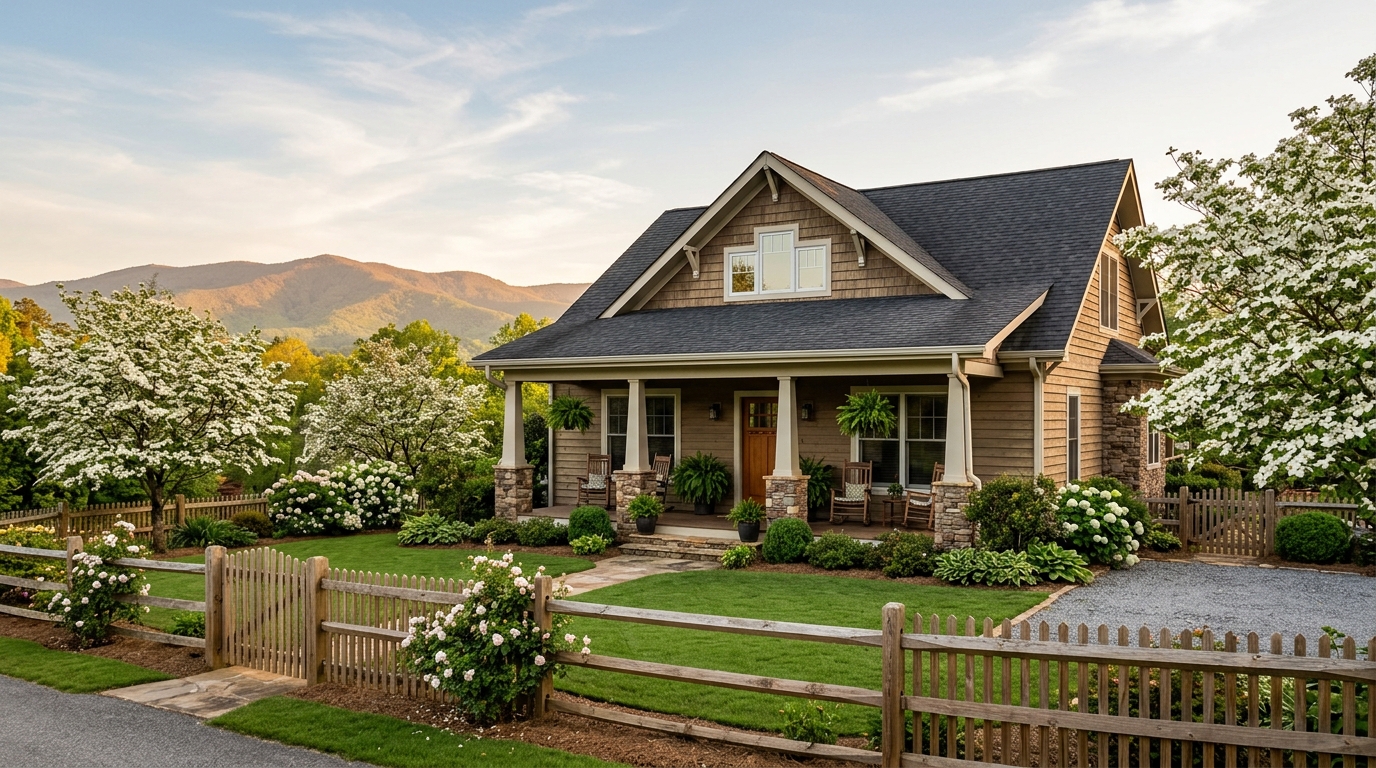
North Carolina fence installations sit at or slightly below national average in 2026. NC enjoys cheap pressure-treated pine supply (regional sawmills), moderate labor rates, and mild winters that don't require frost-line post depth. The three drivers that move pricing: Charlotte and Raleigh suburb HOAs shape material choices, Outer Banks coastal hurricane requirements hike costs for waterfront lots, and the Blue Ridge mountain region around Asheville adds rock-drilling surcharges. Here's what fence install actually costs in North Carolina in 2026.
The 2026 North Carolina fence cost baseline (150 linear ft, 6-ft privacy fence)
- Pressure-treated southern yellow pine (the NC default): $4,600–$6,800. Strong regional supply.
- Cedar pickets: $5,600–$8,200. Common in Asheville and Charlotte upscale neighborhoods.
- Vinyl privacy: $6,400–$9,400. Dominant in Charlotte/Raleigh new subdivisions.
- Aluminum / steel ornamental: $6,800–$10,400. Popular for waterfront views (Outer Banks, Lake Norman).
- Split-rail (3-rail): $2,800–$4,400. Rural and horse-property staple.
- Chain-link (4–6 ft, galvanized): $2,800–$4,800.
- Wrought-iron historical reproduction: $8,400–$13,200. Wilmington historic district, Old Salem area.
Top North Carolina metros: cost variance
| Metro | PT pine 6-ft (150 lf) | Notes |
|---|---|---|
| Charlotte | $5,200–$7,200 | Largest contractor pool; HOA-saturated in Ballantyne/SouthPark/Lake Norman |
| Raleigh / Durham (RTP) | $5,200–$7,400 | Tech-driven housing growth; vinyl preferred in Cary/Apex subdivisions |
| Greensboro / Winston-Salem | $4,600–$6,400 | Lower labor; closer to GA pricing |
| Asheville | $5,400–$7,800 | Blue Ridge rock substrate — auger surcharge $400–$800 |
| Wilmington / Outer Banks coastal | $5,800–$8,400 | Hurricane wind ratings; salt-air galvanized hardware |
| Fayetteville | $4,400–$6,200 | Lowest major NC metro labor cost |
| Chapel Hill | $5,400–$7,800 | University-town HOA aesthetic; cedar preferred |
Outer Banks + Wilmington coastal wind specs
Coastal NC counties (Dare, Currituck, Carteret, Brunswick, New Hanover) fall under Wind Zone 2 per the IRC — fences within ~30 miles of the Atlantic must be engineered for sustained 110–130 mph winds. Practical implications:
- Pressure-treated wood posts (not cedar) for ground contact + wind resistance.
- Post spacing ≤ 6 ft on-center.
- Concrete footings ≥ 30" deep, 10" diameter.
- Galvanized hardware ≥ G185 coating for salt-air corrosion.
- Removable lower panels on Outer Banks beachfront lots so storm surge passes through.
- Vinyl panels require Class B wind rating minimum — confirm in spec sheet.
Coastal engineering adds roughly 10–20% to fence costs vs inland NC pricing.
Blue Ridge mountains — rock-drilling reality
Asheville, Boone, Hendersonville, Brevard, and the entire NC mountain region sit on Appalachian granite and gneiss with shallow topsoil. Most fence-post holes hit solid rock within 12–24 inches:
- Standard rock-augur surcharge: $400–$800 on a 150-ft fence.
- Jackhammer rigs sometimes required: add $500–$1,000.
- Surface-mount post brackets on bedrock-shallow lots (Boone, Black Mountain) — different install method, similar overall cost.
- Frost-line consideration: the NC mountains have a 30–36" frost line (vs 12–18" Piedmont). 24" minimum post depth holds; 30" preferred.
Termite reality
North Carolina sits in Termite Infestation Probability Zone 1 alongside GA, SC, AL. Eastern subterranean termites are the dominant pest. Best practices match GA recommendations:
- Ground Contact (UC4A) PT pine for posts; 0.40 lb/cf retention minimum.
- Cedar pickets above grade + PT pine posts below is the smart combo.
- Steel post + cedar picket = the termite-defense pro install. Eliminates ground-contact wood entirely.
- Annual perimeter termite inspection if you've gone with wood posts in soil.
HOA + permit reality
- Charlotte and Raleigh suburb HOAs are nearly universal in subdivisions built since 1995. Architectural-review committee approval averages 2–4 weeks. Submit before signing contractor.
- Common HOA constraints: 6-ft height max in side/rear, 4-ft in front; "good side out"; pre-approved color list for vinyl.
- NC has no statewide fence contractor license — vet via Better Business Bureau and insurance verification.
- City permits: required for fences over 6 ft in most NC cities, with fees $75–$300. Wilmington historic-district reviews add 4–6 weeks.
- Property-line surveys recommended in older neighborhoods where original lot lines may have shifted. Survey stake-out: $400–$700.
How to bid it out
- Get 3 bids, all with proof of general liability insurance ($1M minimum) and workers' comp.
- Specify Ground Contact (UC4A) PT pine for posts in writing — 0.40 lb/cf retention.
- Post depth ≥ 24" Piedmont, ≥ 30" mountains.
- For coastal installs: demand the wind rating spec and G185 hardware in writing.
- 1-year labor + 5-year material warranty is the NC standard. Walk away from contractors offering less.
Bottom line for North Carolina
Pressure-treated southern yellow pine privacy fence (150 linear feet, 6 ft tall): $4,600–$6,800 in 2026 — North Carolina's most economical viable option. Add ~15% for coastal hurricane engineering or mountain rock drilling. The smart upgrade is the steel-post + cedar picket combo at $6,400–$8,800 — best long-term termite protection. Run your state-adjusted estimate with our fence installation cost calculator, or see the full metro breakdown on our North Carolina fence cost landing page.
More cost guides for North Carolina
Planning multiple projects? Every other 2026 North Carolina cost guide carries the same state-specific labor and pricing detail.
- Cost GuideBasement Finishing Cost in North Carolina 2026
- Cost GuideBathroom Remodel Cost in North Carolina 2026
- Cost GuideDeck Construction Cost in North Carolina 2026
- Cost GuideFlooring Installation Cost in North Carolina 2026
- Cost GuideHardscape Installation Cost in North Carolina 2026
- Cost GuideIn-Ground Pool Installation Cost in North Carolina 2026
- Cost GuideKitchen Remodel Cost in North Carolina 2026
- Cost GuideLandscaping Cost in North Carolina 2026
- Cost GuidePainting Cost in North Carolina 2026
- Cost GuideRoof Replacement Cost in North Carolina 2026
- Cost GuideSolar Panels Cost in North Carolina 2026
- Window ReplacementWindow Replacement Cost in North Carolina 2026
Cost by state for this project
State-adjusted ranges with local labor and material multipliers.