Cost Guide
Flooring Installation Cost in Vermont 2026
Last updated · May 14, 2026 · Vermont cost-index 1.10×
Vermont runs ~10% above national — limited contractor density and historic-home prevalence. A typical 1,000 sq ft mid-grade flooring install (mid-tier engineered hardwood or LVP) that nationally averages $7,000–$15,000 lands at $7,500–$26,400 for most Vermont homeowners in 2026. Below: the real numbers, the three biggest local cost drivers, and the moves that actually reduce your final bill.
The headline numbers for 2026
Based on contractor pricing data, BLS regional labor rates, and project-specific market benchmarks, here's what a flooring installation costs across Vermont:
- Single room (200 sq ft): $1,600–$6,600
- Mid-home (1,000 sq ft): $7,500–$26,400
- Whole-home (2,000+ sq ft): $13,200–$48,800
These reflect Vermont's state-level cost factor of 1.10× the national baseline, mid-range quality, with a standard 10% contingency. Budget-grade runs 20–30% lower; high-end scope and premium materials push 60–90% higher. Run our Vermont flooring installation cost calculator for a state-adjusted estimate.
Cost ranges sourced from contractor pricing data, Bureau of Labor Statistics regional labor rates, and 2026 industry cost-vs-value benchmarks for flooring installation.
Why Vermont flooring installation pricing looks the way it does
Three state-level factors drive the spread:
- Limited contractor pool. Vermont has one of the lowest licensed-contractor counts per capita in the U.S. That keeps trade rates 15–25% above national average.
- Cold-climate code requirements. VT residential code requires R-49 ceiling insulation and high-efficiency HVAC. Adds $1,000–$3,500 on major remodels.
- Pre-1940 housing common. Most VT towns have heavy historic housing stock. Asbestos, lead paint, and galvanized supply line replacement add routine 8–12% to typical bids.
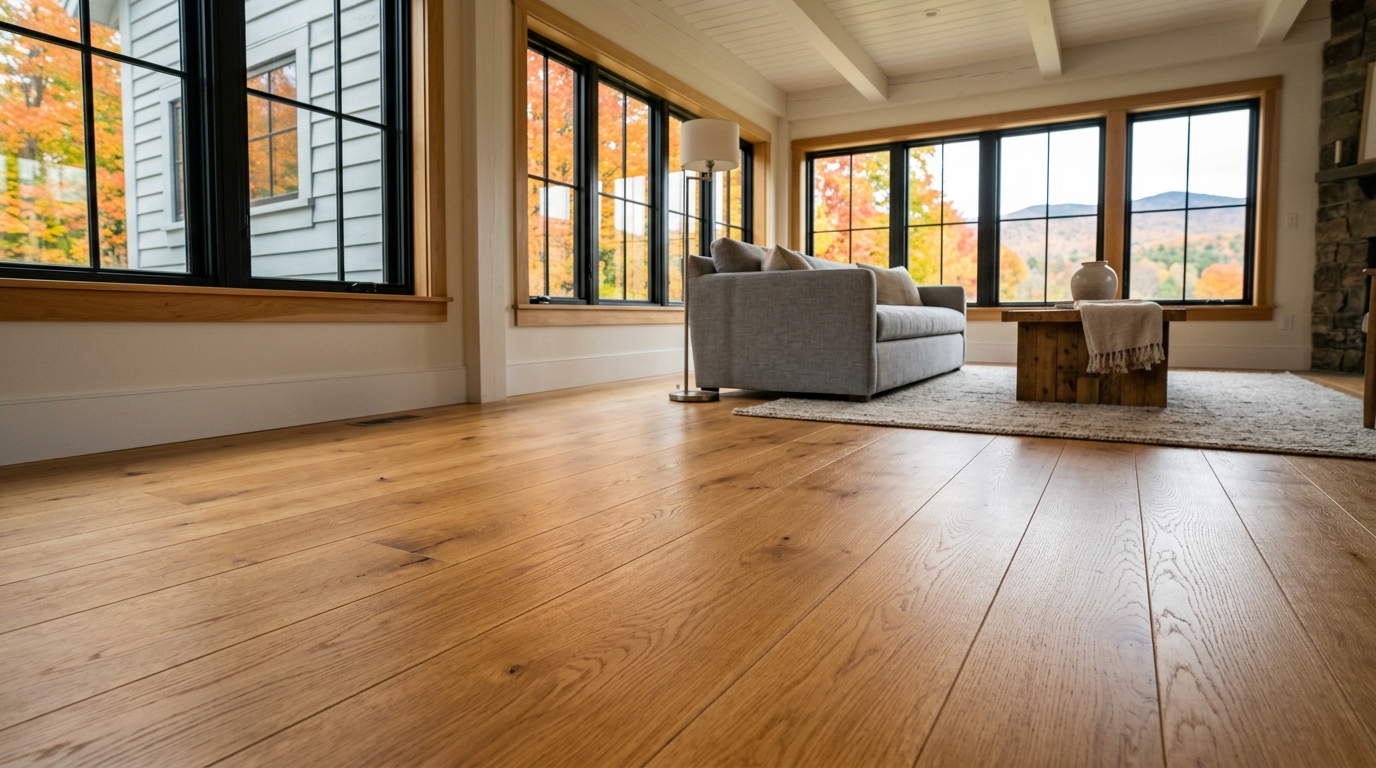
Representative flooring installation in Vermont. Realistic 2026 budget for the typical scope shown: $7,500–$26,400.
Full cost breakdown: mid-home (1,000 sq ft), Vermont
Here's what the $7,500–$26,400 range looks like split into actual line items:
| Category | Low | High |
|---|---|---|
| Labor (50%) | $3,750 | $13,200 |
| Materials & underlayment (35%) | $2,625 | $9,240 |
| Permits & fees (5%) | $375 | $1,320 |
| Contingency (10%) | $750 | $2,640 |
| Total estimated range | $7,500 | $26,400 |
Five ways to actually save money on a Vermont flooring installation
- Plan around Vermont's biggest cost driver. Vermont has one of the lowest licensed-contractor counts per capita in the U.S. That keeps trade rates 15–25% above national average.
- Account for the second-largest driver. VT residential code requires R-49 ceiling insulation and high-efficiency HVAC. Adds $1,000–$3,500 on major remodels.
- Buy materials direct, not through the contractor. Owner-supplied flooring lets you skip the typical 15–25% contractor markup on $4,000–$9,000 of material spend. Use Floor & Decor or LL Flooring for in-stock mid-grade goods.
- Stick to one species and one direction. Mixing materials across rooms or running plank perpendicular to long walls adds $1.00–$2.50 per sq ft in cut waste, transitions, and labor. One product, one direction is the cheapest install — and visually the most cohesive.
- Skip the moisture-barrier upgrade unless you're below grade. Pad upgrades and vapor-barrier add-ons run $0.50–$1.50 per sq ft. They're worth it on basements and slab-on-grade installs; rarely worth it on second-floor or pier-and-beam jobs that don't have a moisture problem to begin with.
Timeline expectations
Most Vermont flooring jobs take 2–7 working days. LVP and laminate finish fastest (1–3 days). Tile and hardwood take 4–7 days due to subfloor prep, drying, and acclimation. Stair runs add 1–2 days each.
Vermont flooring installation cost — 4-year trajectory
Vermont flooring installation pricing rose +23.3% from 2022 to 2026, from $15,000 to $18,500 on a typical mid-range project. Year-over-year detail:
| Year | Typical mid-range total | YoY change |
|---|---|---|
| 2022 | $15,000 | — |
| 2023 | $16,700 | +11.3% |
| 2024 | $17,700 | +6% |
| 2025 | $18,000 | +1.7% |
| 2026 (projected) | $18,500 | +2.8% |
Why flooring costs jumped, then leveled off
Solid hardwood pricing tracked the lumber spike of 2022 and added 14–22% in a single year. LVP/laminate caught a different wave: container shipping costs and Vietnamese factory delays added 10–18% in 2022-2023. By 2024 both inputs had largely re-stabilized — but installer wages didn't roll back, and tile mortar/grout chemistries continued their 5–7%/yr climb tied to portland-cement pricing. The 2025→2026 flat looks like relief, but the new floor (pun intended) is permanently above pre-pandemic levels.
Vermont vs. neighboring states
How does Vermont compare to its direct neighbors? The numbers below reflect overall renovation cost differences — useful context if your project lives near a state line.
- vs. New York (1.40×)21% cheaper in New York
- vs. Massachusetts (1.32×)17% cheaper in Massachusetts
- vs. New Hampshire (1.15×)4% cheaper in New Hampshire
Typical flooring installation cost in major Vermont metros
Within Vermont, urban metros run noticeably higher than the state-wide average shown above. Here's what to expect across the top metros — full per-metro breakdown for all U.S. cities is on the metro pricing hub.
FAQ — flooring installation in Vermont
How much does flooring installation cost in Vermont in 2026?
Typical flooring installation pricing in Vermont runs $7,500–$26,400 for a mid-home (1,000 sq ft), mid-range scope. Budget-grade work lands 20–30% lower; high-end scope and premium materials push 60–90% higher.
Do I need a permit for flooring installation in Vermont?
Most Vermont municipalities require a permit for any work involving plumbing, electrical, structural change, or roof tear-off. Cosmetic-only updates typically don't. Permit fees commonly run $150–$600 in Vermont depending on jurisdiction.
When is the cheapest time to schedule flooring installation in Vermont?
Late fall and winter are typically the quietest scheduling windows in Vermont — contractor bids run 5–15% softer than in spring/summer peak season. Booking 6–10 weeks ahead of your target start date usually unlocks the best pricing.
Is Vermont an expensive state for this project?
Vermont runs roughly 10% above the U.S. national average. The state's overall cost-index factor of 1.10× the national baseline drives the spread.
The bottom line for Vermont homeowners
Vermont runs roughly 10% above the U.S. national average — your zip code, contractor pool, and permit jurisdiction matter as much as the state average. Knowing the realistic state-specific number lets you tell a fair quote from an inflated one. Get a state-adjusted breakdown in 60 seconds with our free flooring installation cost calculator, then collect three written bids from licensed local contractors before signing anything.
More cost guides for Vermont
Planning multiple projects? Every other 2026 Vermont cost guide carries the same state-specific labor and pricing detail.
- Cost GuideBasement Finishing Cost in Vermont 2026
- Cost GuideBathroom Remodel Cost in Vermont 2026
- Cost GuideDeck Construction Cost in Vermont 2026
- Fence InstallationFence Installation Cost in Vermont 2026 — Frost-Depth (48in), Labor & Material Guide by Metro
- Cost GuideHardscape Installation Cost in Vermont 2026
- Cost GuideIn-Ground Pool Installation Cost in Vermont 2026
- Cost GuideKitchen Remodel Cost in Vermont 2026
- Cost GuideLandscaping Cost in Vermont 2026
- Cost GuidePainting Cost in Vermont 2026
- Cost GuideRoof Replacement Cost in Vermont 2026
- Cost GuideSolar Panels Cost in Vermont 2026
- Window ReplacementWindow Replacement Cost in Vermont 2026
Cost by state for this project
State-adjusted ranges with local labor and material multipliers.