Materials
Flooring Materials Compared: Hardwood, Vinyl, Tile, Laminate, and Carpet
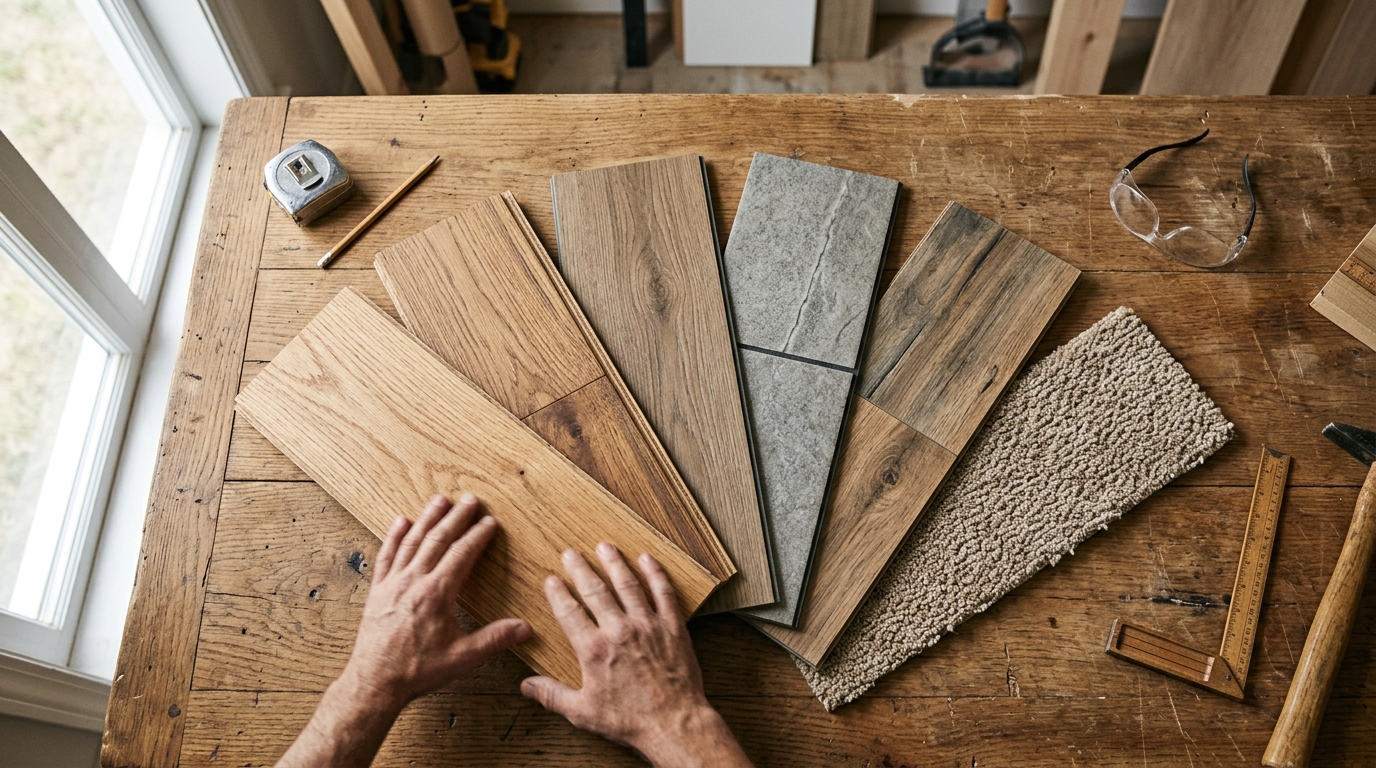
Flooring is the largest single visible surface in your home and the one buyers walk on within ten seconds of opening the front door. The category you pick affects cost, maintenance, lifespan, and resale — and there's no single "best" answer. The right floor depends on the room, the climate, and how long you plan to own the home. Here's a clear-eyed comparison of the five major options at 2026 pricing.
Solid hardwood
Installed cost: $10–$20/sq ft. The classic: 3/4" thick planks of solid wood (oak, maple, hickory, walnut) that can be sanded and refinished 5–7 times over its life.
- Lifespan: 50–100 years if properly maintained
- Best for: Living rooms, bedrooms, dining rooms, hallways
- Avoid in: Bathrooms, basements, kitchens with heavy spill risk
- Pros: Highest resale value, refinishable, ages beautifully, premium feel
- Cons: Vulnerable to water and humidity, scratches, expensive, requires acclimation before install
Solid hardwood is the gold standard for resale. In most U.S. markets, listings with hardwood floors close 5–10% faster than comparable listings with carpet or laminate.
Engineered hardwood
Installed cost: $8–$15/sq ft. A real-wood top veneer (1–4 mm) bonded to a plywood core. Looks identical to solid wood, costs 30–50% less, and is dimensionally stable enough for basements and radiant-heat applications.
- Lifespan: 25–40 years
- Best for: Same as solid hardwood, plus basements and concrete subfloors
- Pros: Same look as solid, lower cost, more dimensionally stable, can install over concrete
- Cons: Refinishable only 1–2 times (depending on veneer thickness), still vulnerable to standing water
For most homeowners, engineered hardwood delivers 90% of the look and resale benefit of solid hardwood at 60–70% of the price. It's the smart-money pick.
Luxury vinyl plank (LVP) and luxury vinyl tile (LVT)
Installed cost: $4–$9/sq ft. Multilayer composite with a printed top layer mimicking wood or stone. The category exploded in 2018–2024 and now dominates new-construction and renovation markets.
- Lifespan: 15–25 years
- Best for: Bathrooms, kitchens, basements, mudrooms, rentals, high-traffic areas
- Pros: Fully waterproof (modern grades), pet- and kid-proof, easy DIY click-lock install, low maintenance
- Cons: Doesn't add resale value the way real wood does, can feel "hollow" underfoot if installed without underlayment, lower-grade products dent under heavy furniture
Pick a 6 mm+ thickness with a wear layer of at least 12 mil for residential use, 20 mil+ for kitchens or rentals. Below those specs, the floor will telegraph subfloor imperfections and dent quickly.
Tile (ceramic and porcelain)
Installed cost: $7–$15/sq ft. Fired clay tiles bonded to a cement-board substrate with thinset and grout. The most durable and water-resistant flooring you can buy.
- Lifespan: 50+ years (the tile itself); grout needs occasional sealing or replacement
- Best for: Bathrooms, kitchens, mudrooms, entries, anywhere with water
- Pros: Indestructible, fully waterproof, works with radiant heat, infinite design options
- Cons: Cold underfoot (use radiant heat to fix), hard on standing legs and dropped dishes, labor-intensive install (drives total cost up), grout requires periodic sealing
Porcelain (denser, less porous) is the better pick for floors. Ceramic is fine for walls and backsplashes. Avoid glossy finishes in wet areas — they're slippery.
Laminate
Installed cost: $3–$7/sq ft. A printed photographic layer over a high-density fiberboard core. The original "fake wood" floor; mostly displaced by LVP at this point but still a reasonable budget option.
- Lifespan: 15–25 years
- Best for: Bedrooms, living areas in budget remodels, low-traffic rooms
- Pros: Cheapest hard surface, scratch-resistant, easy DIY click-lock install
- Cons: Not waterproof (water swells the fiberboard core), can't be refinished, "hollow" sound, lower resale value than real wood
If you're choosing between laminate and LVP at similar price points, pick LVP. Same price, fully waterproof, more versatile.
Carpet
Installed cost: $3–$10/sq ft. Soft, warm, sound-absorbing — and increasingly out of favor in public-facing rooms. Still a strong pick for bedrooms and basements where comfort matters.
- Lifespan: 8–15 years (depends heavily on traffic and pad quality)
- Best for: Bedrooms, finished basements, stairs, theater rooms
- Avoid in: Kitchens, bathrooms, dining rooms, entries
- Pros: Warm, soft, quiet, lowest install cost, hides subfloor imperfections
- Cons: Stains, traps allergens, dates quickly, depresses resale in main living areas, replaced every 10 years
The single biggest mistake homeowners make with carpet is buying cheap pad. The pad is what determines comfort and lifespan more than the carpet itself. Spend $1.50–$2.50/sq ft on pad with a density of 8 lb or higher.
Quick comparison table
For a 1,200 sq ft mid-range install:
- Carpet: $3,600–$12,000 — 10-year replacement cycle
- Laminate: $3,600–$8,400 — 20-year cycle
- LVP: $4,800–$10,800 — 20-year cycle
- Tile: $8,400–$18,000 — 50-year cycle (essentially permanent)
- Engineered hardwood: $9,600–$18,000 — 30-year cycle
- Solid hardwood: $12,000–$24,000 — multi-generational
Get state-adjusted pricing for your project size with our flooring cost calculator.
Cost data sourced from the 2026 Remodeling Magazine Cost vs Value Report, Bureau of Labor Statistics regional labor data, and contractor pricing surveys.
Bottom line
Pick by room, not by preference: hardwood (solid or engineered) for primary living areas, tile for wet areas, LVP for high-traffic and budget projects, carpet for bedrooms only. Order 10% extra for waste and future repairs. Buy from a reputable flooring retailer (not a big-box discount lot) so you get accurate wear-layer and species labeling. And install over a properly leveled subfloor — the flooring is only as good as what's underneath.
Cost by state for this project
State-adjusted ranges with local labor and material multipliers.