Solar Panels
Solar Panel Cost in Colorado 2026 — Xcel vs. Black Hills, Net Metering & Altitude Premium
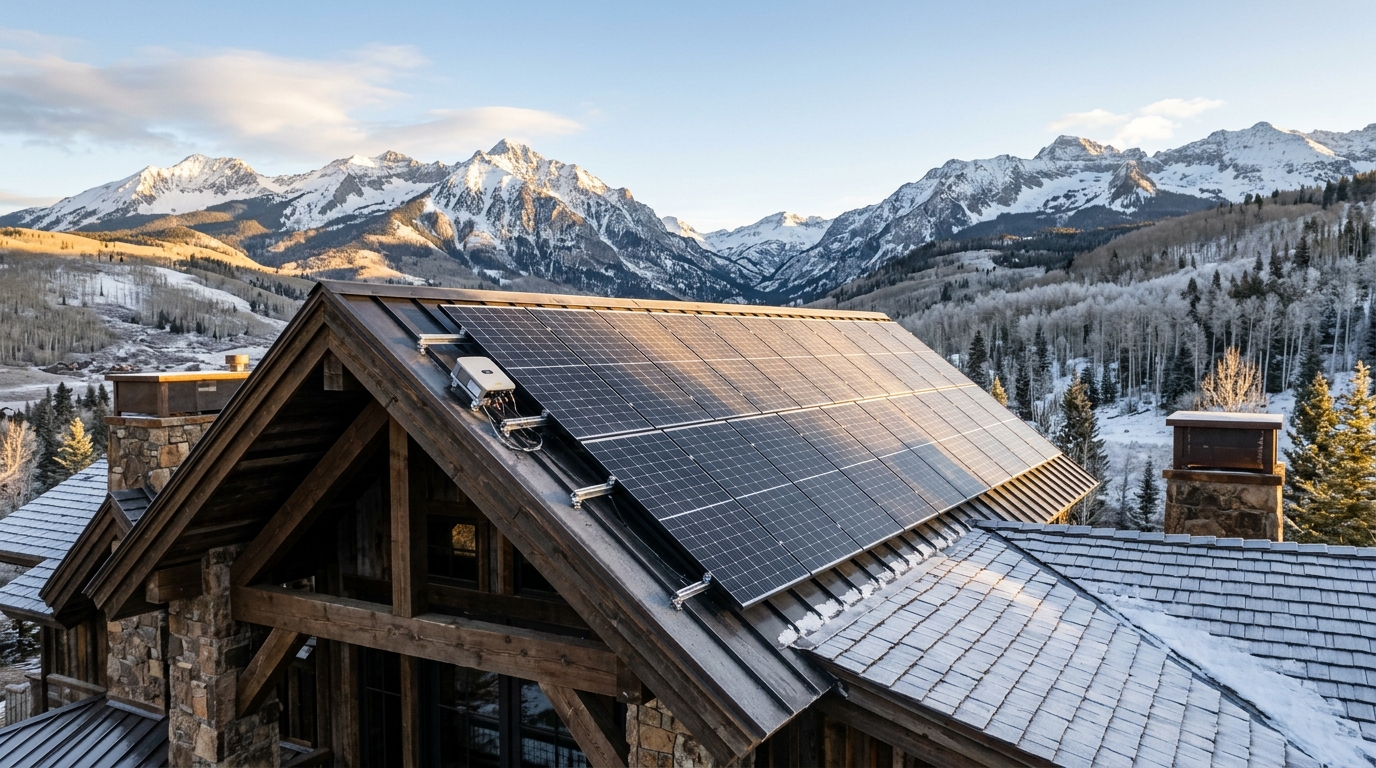
Colorado has an underrated sun resource for a non-Sun-Belt state — 4.7-5.4 peak sun hours/day on the Front Range, plus an altitude bonus of 5-10% extra annual production vs. sea-level equivalents (thinner atmosphere = less photon attenuation). Combined with full 1:1 net metering at Xcel Energy (the state's dominant utility) and the federal 30% tax credit, you get payback periods of 8-11 years — solidly in the "yes" zone for Front Range homeowners.
The 2026 Colorado solar baseline (typical 8 kW system)
- Gross cost (before incentives): $15,200-$22,400 ($1.90-$2.80 per watt).
- Federal tax credit (30% §25D): reduces cost by $4,560-$6,720.
- Net cost after federal credit: $10,640-$15,680.
- With battery added (10 kWh): add $9,000-$13,500 gross / $6,300-$9,450 net.
- Typical payback period: 8-11 years (best on Xcel TOU plan with east-west panel split).
State-adjusted by system size and roof type: Colorado solar cost calculator.
Xcel Energy net metering (still retail-rate in 2026)
Xcel Energy serves ~70% of Colorado households and still offers full retail-rate net metering for residential systems under 25 kW. Imports and exports net out monthly at the same rate (~$0.11-$0.14/kWh on the standard residential tariff), with excess credits rolling forward. Black Hills Energy customers (Pueblo region) get similar 1:1 treatment under a separate tariff. Municipal utilities (Colorado Springs, Fort Collins, Longmont) vary — Colorado Springs Utilities is the weakest, crediting exports at avoided-cost (~$0.04/kWh) instead of retail.
The Colorado altitude production bump
Solar panels at high elevation produce 5-10% more annual energy than sea-level equivalents. The reason: thinner atmosphere passes more direct beam radiation, and ambient temperatures run cooler (panels lose ~0.35%/°C above 25°C, so cooler operating temps reduce that loss). Practical effect: a "rated" 10 kW system in Denver (5,280 ft) produces ~16,500 kWh/year, vs. ~15,400 kWh for an identically-rated install in Houston — despite Houston having ~10% more sun-hours on paper.
Three Colorado-specific cost drivers
- Mountain-town labor scarcity. Aspen, Vail, Telluride, and Steamboat Springs installer labor runs 15-25% above Front Range rates due to housing-cost-driven labor flight.
- HOA architectural-control headaches. Many post-2000 Front Range subdivisions require HOA design review for visible solar; Colorado's 2008 solar-access law forbids outright bans, but HOAs can mandate panel-color/placement that adds $300-$1,200 of design overhead.
- Snow-load engineering. Roofs in mountain ZIPs (Summit, Park, Eagle counties) need 60-90 psf snow-rated racking vs. 30-40 psf on the plains — adds $500-$1,500 to a typical install.
The bottom line for Colorado homeowners
Colorado solar in 2026 is a fundamentally sound investment for Front Range and Western Slope homes on Xcel or Black Hills. Avoid east-of-Pueblo Colorado Springs Utilities territory unless you size for self-consumption with a battery. Pair an 8 kW array with a 10 kWh battery and you'll hit payback in 8-10 years. Run our Colorado solar cost calculator for a system-sized estimate, then collect three written bids from NABCEP-certified installers.
More cost guides for Colorado
Planning multiple projects? Every other 2026 Colorado cost guide carries the same state-specific labor and pricing detail.
- Cost GuideBasement Finishing Cost in Colorado 2026
- Bathroom RemodelBathroom Remodel Cost in Colorado 2026 — Front Range, Mountain Towns, and Permit Realities
- Cost GuideDeck Construction Cost in Colorado 2026
- Fence InstallationFence Installation Cost in Colorado 2026 — Material, Labor & Code Guide by Metro
- Cost GuideFlooring Installation Cost in Colorado 2026
- Cost GuideHardscape Installation Cost in Colorado 2026
- Cost GuideIn-Ground Pool Installation Cost in Colorado 2026
- InsulationInsulation Cost in Colorado 2026 — Xcel Energy Heat Pump-Ready Rebate Stack, Black Hills Energy Programs, and the High-Altitude R-Value Math
- Kitchen RemodelKitchen Remodel Cost in Colorado 2026 — Why CO Kitchens Run 10-20% Above National
- Cost GuideLandscaping Cost in Colorado 2026
- Cost GuidePainting Cost in Colorado 2026
- RoofingRoof Replacement Cost in Colorado 2026 — Hail, Snow Load, and Class-4 Insurance Discounts
- Window ReplacementWindow Replacement Cost in Colorado 2026 — Why CO Runs 5-12% Above National Average
Cost by state for this project
State-adjusted ranges with local labor and material multipliers.
Keep reading
From the pillar series
See how your state ranks for 2026 solar payback →
All 50 US states ranked by payback years on the same $200/mo baseline. Hawaii 3.1 yr, MA 3.7 yr, CT 4.1 yr down to ND 11.5 yr.
See the 50-state ranking →