ROI
Stone Veneer Front Facade ROI 2026 — 94% Recoup, the #2 Renovation
Last updated · May 19, 2026 · Sourced from 2026 Remodeling Magazine Cost vs Value Report
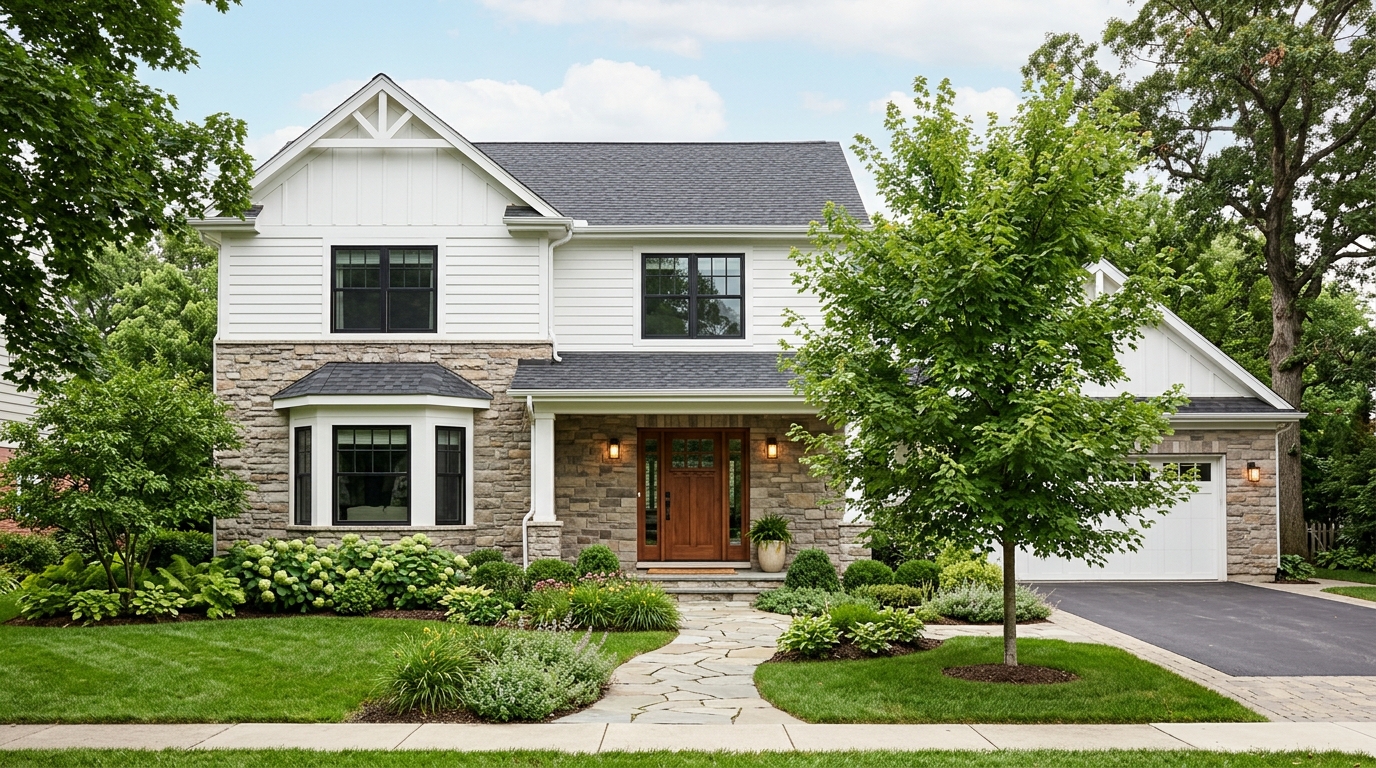
Manufactured stone veneer on a front facade is the #2 highest-ROI renovation in 2026 — recouping 94% of cost at resale on average. It sits between garage doors (102%) and steel entry doors (88%) on the elite-ROI bench. The reason it punches above its price tier: stone veneer is the single most-impactful "instant curb appeal" upgrade available, transforming dated 1980s-1990s vinyl-or-brick facades into something that reads as new construction. For the full 2026 ranking, see our Best ROI Renovations hub.
2026 Cost vs Value — by scope
| Scope | Avg cost | Recouped | % recouped |
|---|---|---|---|
| Partial accent (column wraps, wainscot) | $6,800 | $6,500 | 96% |
| Full lower-facade veneer (most common) | $12,400 | $11,700 | 94% |
| Whole-front replacement (high-end stone) | $22,500 | $17,600 | 78% |
Why stone veneer works as a resale move
- Massive visual transformation. Adding stone to the lower portion of an existing facade changes the first impression more than almost any other upgrade. Buyers who would have dismissed the house in the first 8 seconds of driving up will stop and look.
- Costs less than real stone but reads identically. Modern manufactured stone (Boral, Eldorado, Cultured Stone) is visually indistinguishable from real stone in the listing photo and from the curb. Most buyers can't tell.
- Solves dated facade problems other upgrades can't. A 1985 vinyl-siding home with stone veneer added across the front looks like a 2020 build. No paint job, siding swap, or window replacement matches that visual jump.
- Works in every architectural style. Stacked stone for craftsman/farmhouse, smooth ledgestone for contemporary, river-rock for cottage. Pick the right profile and any home benefits.
The ROI has trended UP, slowly but consistently
| Year | Stone veneer ROI | YoY change |
|---|---|---|
| 2022 | 91% | — |
| 2023 | 92% | +1 pp |
| 2024 | 93% | +1 pp |
| 2025 | 94% | +1 pp |
| 2026 (projected) | 94% | +0 pp |
Unlike most renovation categories — which have lost 5-8 ROI points since 2022 — stone veneer has gained 3 points. Buyer demand for "exterior wow" has only intensified post-pandemic, and manufactured stone pricing has held flat while labor has risen, keeping the install economics favorable.
How to maximize the return
- Stay in the "lower-facade" scope. $10K-$14K projects recoup ~94%. Going whole-front ($22K+) drops to 78% — the extra spend rarely earns it back.
- Pick a neutral stone profile. Tan, beige, soft grey, blended-tone. Avoid trendy reds, deep blacks, or strong color statements that may date by 2030.
- Choose stacked-stone or ledgestone, not river-rock. Stacked profiles read modern; river-rock (large round stones) reads as 1990s-2000s and is the most likely to date badly.
- Wrap to the columns + foundation line. Veneer that wraps around to side returns looks intentional. A flat panel of stone with no wrap looks like a 1985 update.
- Hire a contractor with cultured-stone certification. Cheap installers create water-infiltration risk that destroys 3-5 years of value. Cultured Stone or Boral certification costs ~10% more but protects the install.
What to avoid
- Bold-color stone. Deep red, charcoal, blue-grey. Photographs well, dates fast.
- Stone "everywhere." Wrapping the entire front of the house in stone — overkill in any architectural style. Less is more for ROI.
- Skipping the proper weather barrier. Wrong installation traps moisture behind the stone, leads to siding rot, kills resale. Confirm WRB (weather-resistive barrier) is in the spec.
- DIY install. Stone veneer is heavy, requires proper drainage plane and metal lath. A botched install costs more to tear out and redo than the original quote would have. Hire a pro.
Realistic timeline + lead time
Most lower-facade installs take 3-5 working days from start to cure. Material lead time is typically 1-3 weeks (longer for popular profiles). Plan for ~30 days from contract signing to project completion. If you're remodeling for resale, schedule it 60-90 days before listing.
FAQ
Manufactured stone vs. real stone — does it matter for resale?
For 99% of homes, no. Manufactured stone is cheaper, lighter, easier to install, and visually identical from the street. Real stone only makes sense on homes over $1.5M where buyers may inspect closely.
How long does manufactured stone veneer last?
50-75 years when properly installed with the correct weather barrier and drainage plane. The product itself doesn't degrade. Failures are almost always installation-related (water infiltration), not material-related.
Does HOA approval matter?
Most HOAs allow stone veneer if it matches the architectural standards of the neighborhood. Get the color and profile pre-approved in writing before signing the install contract. Some HOAs (newer developments) require explicit board sign-off.
Will it conflict with the rest of my siding/paint?
Plan the color palette as one project. If your upper siding will look dated after stone goes in, paint it at the same time (add $1,500-$3,000). The combined transformation amplifies ROI more than either alone.
Bottom line
Stone veneer is the highest-impact exterior upgrade you can make for under $15K. It transforms dated 1980s and 1990s facades more dramatically than any other renovation move — and recoups 94% of cost at resale. Stay in the lower-facade scope, pick neutral profiles, and use a certified installer. To see where it ranks against the other 15 major renovations, the Best ROI Renovations 2026 hub has the full table. For the other two elite-tier curb-appeal moves, see our garage door ROI and steel entry door ROI guides.