ROI
Vinyl Siding Replacement ROI 2026 — 81% Recoup on the Elite Tier
Last updated · May 20, 2026 · Sourced from 2026 Remodeling Magazine Cost vs Value Report
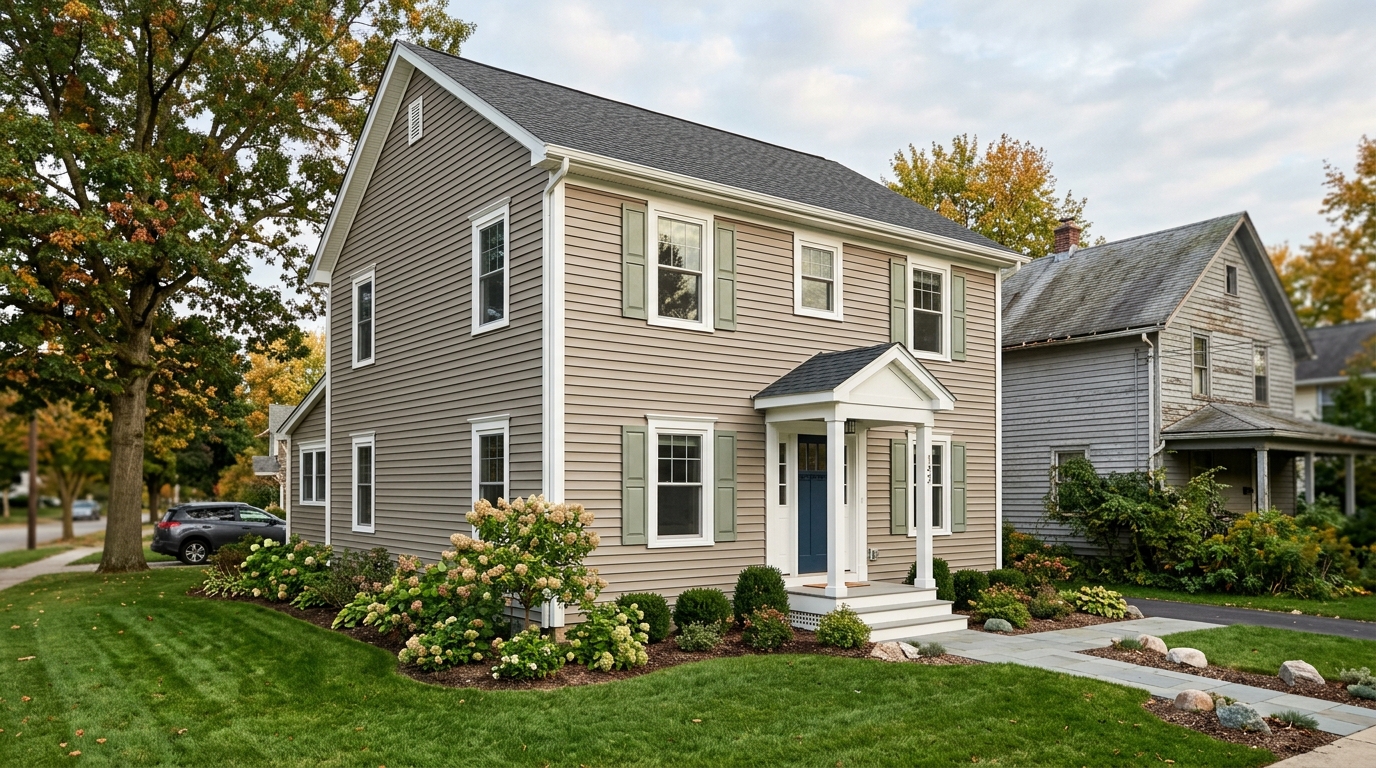
Vinyl siding replacement recoups 81% of cost in 2026 — the #5 best-ROI renovation and the last project in the elite tier (78%+) of the Cost vs Value ranking. It's the cheapest way to transform the largest visible surface of a home. A $18,400 project covers ~1,250 sq ft of facade — about $14.70/sq ft — and turns a pre-2000 home from "needs work" into "move-in ready" in 4-7 days. See where it sits relative to bigger projects in our 2026 ROI ranking.
2026 Cost vs Value — by tier
| Tier | Avg cost | Recouped | % recouped |
|---|---|---|---|
| Basic vinyl siding (1,250 sq ft, mid-grade) | $14,800 | $12,400 | 84% |
| Standard vinyl siding (1,250 sq ft, typical project) | $18,400 | $14,900 | 81% |
| Premium insulated vinyl + trim package | $24,600 | $17,500 | 71% |
| Fiber-cement (Hardie) siding — for comparison | $25,800 | $17,900 | 69% |
Fiber-cement (James Hardie) recoups about the same dollar amount as vinyl but costs ~40% more — so the ROI percentage drops. Fiber-cement wins for long-term ownership and high-end neighborhoods; vinyl wins on pure ROI math.
Vinyl siding vs exterior paint — the ROI math
The most common alternative to siding replacement is a fresh exterior paint job ($3,500-$6,500 for a typical 2-story home). Paint is cheaper upfront but the math actually favors siding when you account for what buyers see:
- Paint over old siding covers the color but not the texture. Faded, brittle, or warped 1990s vinyl still looks 30 years old after painting — buyers see the original siding profile.
- Vinyl replacement resets the entire exterior surface — fresh siding profile, new trim, new soffit/fascia. Reads as "completely renovated exterior" rather than "they painted to hide it."
- Resale recoup: paint recoups ~50-60%, siding recoups 81% — and the absolute dollar amount recouped is 2-3× higher with siding.
Skip paint if your siding is pre-2000 vinyl, aluminum, or wood siding showing visible age. Replace instead.
When the math really works
- Pre-2000 home with original siding. The sweet spot — original aluminum or first-gen vinyl looks unmistakably dated. Replacement reads as "modernized home" in every listing photo.
- Visible damage anywhere on the facade. Hail dings, cracked panels, mildew streaks. Buyers and inspectors flag siding damage as a deferred-maintenance signal — replacement eliminates the deduction.
- Selling within 18 months. Fresh siding's "wow factor" fades after 5+ years; capture it while it's new.
- Mid-range neighborhood ($300K-$700K homes). The ROI sweet spot. In this band, vinyl siding doesn't read as "cheap" — it reads as "well-maintained." Above $1M, buyers expect fiber-cement or natural materials.
When to skip vinyl and pay up for fiber-cement
- You're in a $1M+ neighborhood. Vinyl reads as down-market in luxury contexts. Fiber-cement (Hardie) or natural-wood siding is table stakes.
- HOA bans vinyl. Many newer-build subdivisions require fiber-cement or stucco — check before contracting.
- You're in a wildfire-prone zone. Vinyl is rated combustible; fiber-cement is non-combustible. WUI-zone homes in CA, CO, OR, WA may have insurance penalties on vinyl.
- You're staying 25+ years. Fiber-cement lasts 50+ years; vinyl 25-30. For very long ownership, fiber-cement wins on cost-per-year.
ROI trajectory — gentle decline, still elite
Vinyl siding ROI was 88% in 2022, sliding to 81% in 2026 — a 7-point drop driven by install-labor inflation outpacing vinyl panel prices. Still firmly in the elite tier and projected to stay above 78% through 2027.
| Year | Vinyl siding ROI | YoY change |
|---|---|---|
| 2022 | 88% | — |
| 2023 | 84% | -4 pp |
| 2024 | 83% | -1 pp |
| 2025 | 82% | -1 pp |
| 2026 (projected) | 81% | -1 pp |
How to maximize the ROI
- Stay mid-range, skip "luxury" lines. Standard vinyl from a major brand (CertainTeed Monogram, Mastic Carvedwood, Royal Building Products) hits the 81% ROI mark. Premium insulated vinyl drops to 71% — the upcharge rarely recoups.
- Choose timeless colors. Warm greige, sage green, soft cream, navy with white trim, slate gray. Skip pure white (shows dirt), pastels (date fast), and saturated reds/blues (shrink buyer pool).
- Bundle soffit, fascia, and trim replacement. Original-era trim around new siding screams "partial job." Adds $1,500-$3,000 and turns the project into a true exterior reset.
- Replace gutters at the same time. Old gutters with new siding looks unfinished. Aluminum gutters add $1K-$2K and complete the visual transformation.
- Insist on house-wrap underneath. A vapor barrier (Tyvek or equivalent) under new siding is now standard and dramatically reduces moisture risk. Skip the contractor who tries to omit it.
- Get the manufacturer warranty registered. Transferable lifetime warranties (CertainTeed Sure-Start, Royal Lifetime Limited) add real value at sale and cost nothing extra to claim.
What to avoid
- Builder-grade entry-level vinyl ($8-$10/sq ft total). Thin panels (under 0.044″ thickness) warp in sun, fade fast, look cheap by year 5. Mid-grade (0.046″+) is the floor for ROI.
- Trendy "designer" colors. Bold blacks, mustard yellows, terracotta. They photograph well; they age badly. Stick to neutral.
- Mixing siding types on the same facade. Vinyl on most of the house + a different material on one wall reads as "cost-cutting" to buyers — unless it's a clearly intentional design accent (e.g., stone veneer base + vinyl above).
- Partial siding (one side only). Replacing just the visible front face leaves the side and back looking dated — buyers walk the perimeter and notice. Do the whole envelope or skip.
Realistic timeline
A typical 1,250 sq ft vinyl re-siding job takes 4-7 days on-site with a 3-person crew. Lead time on materials is usually 1-3 weeks. Plan for the full project to span 4-5 weeks from contract signature to completion. Don't schedule it the week before listing photos — give yourself a week for cleanup, paint touch-up on shutters and trim, and landscaping refresh.
FAQ
Should I get insulated vinyl or standard?
For pure ROI, standard. Insulated vinyl costs ~30% more, returns about the same dollar amount, and the energy-savings angle adds maybe $300-$500 to resale. For long-term ownership in cold climates (MN, WI, ND, MT), insulated vinyl pays back on utility bills over 8-10 years — but pre-sale, skip the upcharge.
Does dark-colored vinyl really warp?
Less than it used to, but yes — south- and west-facing walls in hot states (TX, AZ, FL, NV) can still see heat-warping on the darkest colors. Most major brands now offer "heat-stabilized" or "VistaShield" dark colors with extended UV warranties. Insist on those if you're going darker than medium gray.
Vinyl vs vinyl-look fiber cement — what's the difference for ROI?
Standard vinyl recoups 81% at lower cost. Fiber-cement (James Hardie, LP SmartSide) recoups 69% but at higher absolute dollar value. In neighborhoods where buyers expect fiber-cement (newer subdivisions, $700K+ homes), Hardie is the right choice despite worse percentage. Below that, vinyl wins the math.
Can I just power-wash and paint instead?
On siding under 15 years old in good shape, yes — a power wash + targeted touch-ups can buy 3-5 more years at very low cost. On siding 20+ years old or with visible damage, paint is a bandage that buyers see through. Replacement is the better long-term play.
Will new siding affect my home insurance?
Usually positively. Many insurers offer 5-15% premium discounts for newly-replaced siding (especially impact-resistant variants in hail-prone states). Notify your insurer post-install — most homeowners forget and miss the discount.
Bottom line
Vinyl siding replacement is the elite-tier ROI move for any pre-2000 home with original siding. $18,400 on average, 81% recoup, 4-7 day install, dramatic visual transformation. Stay mid-range, pick a timeless color, bundle trim and gutters, get the manufacturer warranty registered. Combine with the elite-tier Curb Appeal Power Trio (garage door + stone veneer + steel entry door) and your total exterior renovation comes in around $40K with ~89% blended recoup — the cheapest "completely renovated exterior" presentation available. For comparison against all 16 ranked projects, see our 2026 ROI hub.