Pool Buyer's Guide
Vinyl Liner vs Fiberglass vs Concrete Pool: 2026 Cost & Lifespan Compared
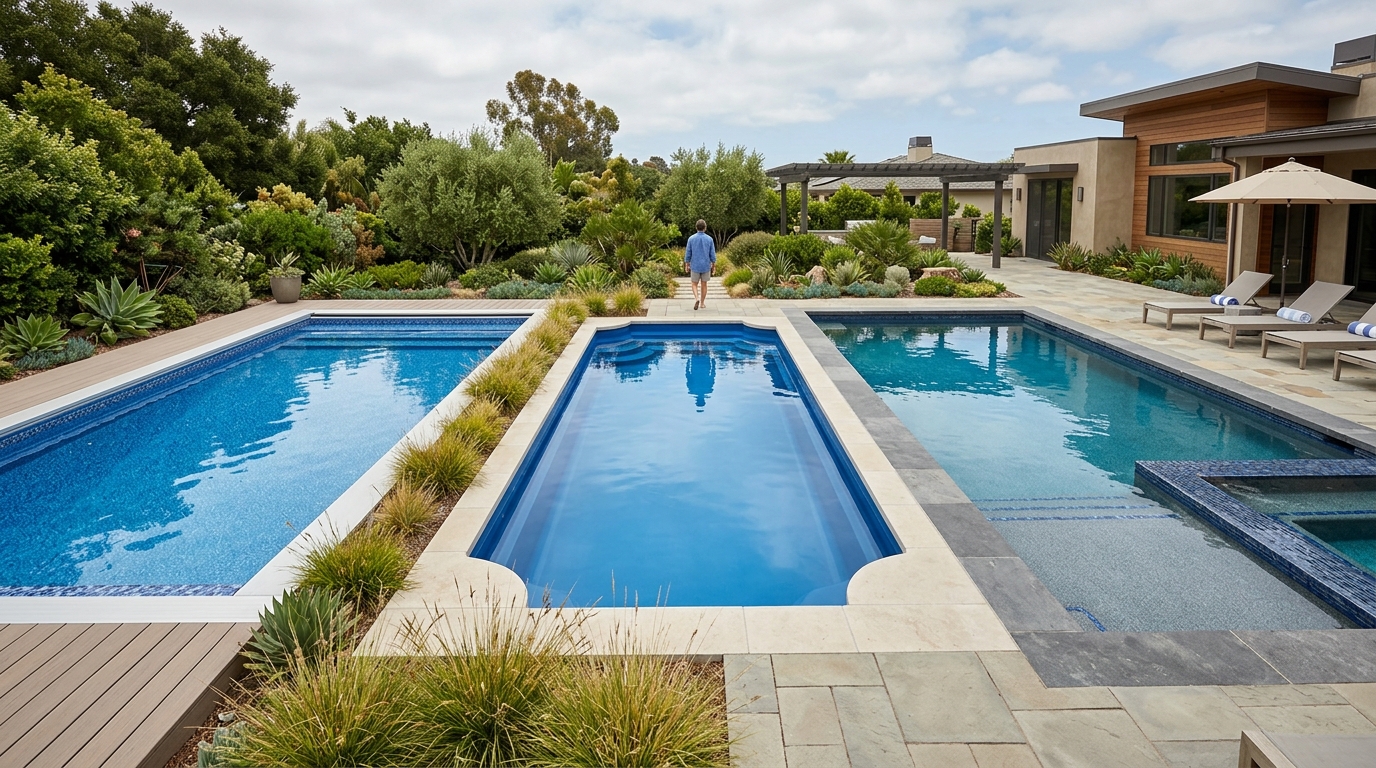
There are three real choices in U.S. in-ground pools: vinyl liner, fiberglass, and concrete (gunite/shotcrete). They are not equivalent products at different price points — they're fundamentally different construction methods with different lifespans, maintenance requirements, and resale dynamics. Here's the honest 2026 comparison.
The 2026 cost spread at a glance
- Vinyl liner: $30,000–$60,000 installed (small to large)
- Fiberglass: $40,000–$85,000 installed
- Concrete / gunite: $55,000–$110,000+ installed (more for custom shapes and features)
Important caveat: all three numbers exclude the surrounding deck, fence, landscaping, equipment pad, and pool house — line items that routinely add 25–40% to the total project budget. A "$60k vinyl pool" in your contractor's quote is closer to a $80–$85k total backyard project.
Install timeline: how long are you living with a dirt hole?
- Vinyl liner: 3–6 weeks from excavation to first swim
- Fiberglass: 2–4 weeks (fastest — the shell ships pre-made)
- Concrete / gunite: 8–14 weeks (longest — multi-stage cure)
Fiberglass wins decisively on install speed. The pool shell is manufactured at a factory and delivered to your home on a flatbed truck — most installers can have you swimming in under a month. Concrete is the opposite: gunite has to cure for 28 days before tile and plaster can go in, and plaster cures another 7–10 days before chemicals can be added. If you want to swim this summer, fiberglass and vinyl are your two realistic options.
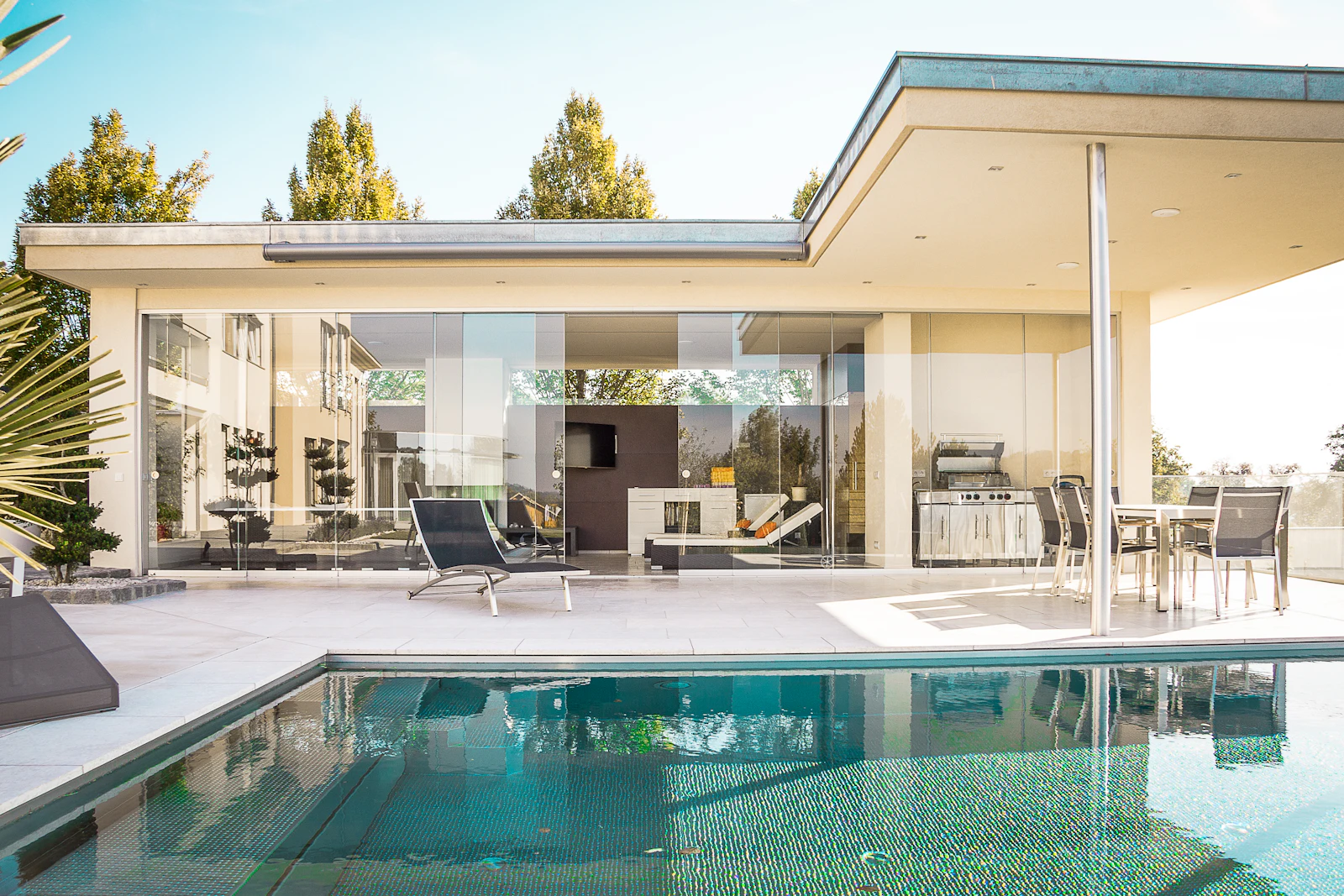
A typical mid-range residential in-ground pool. The pool itself is roughly 60–70% of the total backyard project — the deck, fencing, and landscaping account for the remaining 30–40%.
Lifespan and replacement: the real long-term cost
This is where the gap between "cheap upfront" and "cheap over 30 years" reveals itself:
- Vinyl liner: 8–12 years to liner replacement. Replacement runs $4,500–$8,500 each cycle (liner + labor + water + chemistry restart). Over 30 years, that's 2–3 liner replacements: $10k–$25k of additional cost on top of the original install.
- Fiberglass: 25–35 year shell lifespan. The shell itself doesn't need replacement, but the gelcoat surface may need professional refinishing once every 15–20 years ($5,000–$10,000). Surrounding coping and tile may need refresh on a similar timeline.
- Concrete: 50+ year shell lifespan. But plaster (the interior surface) needs replastering every 10–15 years at $5,000–$8,000. Tile lines need re-grouting every 5–7 years. Over 30 years: 2–3 replasters = $12–$25k.
30-year total cost of ownership (install + replacements + plaster/liner cycles, excluding annual maintenance):
- Vinyl liner: $45,000–$85,000 (cheaper upfront, but 2–3 liner replacements catch up)
- Fiberglass: $50,000–$100,000 (best long-term value for the upfront price)
- Concrete: $70,000–$140,000 (most expensive over 30 years, but unmatched customization)
Annual maintenance: ongoing costs that aren't equal
- Vinyl liner: $1,000–$2,000/yr. Cheapest annual — smooth surface resists algae, no replastering, only chemicals + filter media + pump electricity.
- Fiberglass: $800–$1,800/yr. Slightly cheaper than vinyl on chemicals — the non-porous gelcoat surface is more algae-resistant and requires 30–40% less chlorine over the season.
- Concrete: $1,500–$3,500/yr. Most expensive — porous plaster harbors algae, requires higher chemical doses, and tile/grout needs annual brushing.
Over 30 years of annual maintenance: vinyl ≈ $40k, fiberglass ≈ $35k, concrete ≈ $70k. Concrete really is the most expensive pool to own — almost 2× the lifetime cost of fiberglass.
Customization: the one area concrete clearly wins
Fiberglass pools come in fixed shapes from the manufacturer's catalog — usually 30–60 shape options ranging from rectangular to freeform kidneys. Vinyl liner pools are slightly more flexible (the steel/polymer walls can be configured) but the shapes are still constrained.
Concrete is the only choice if you want:
- A truly custom shape (anything that's not in a catalog)
- Beach entries, infinity edges, or vanishing edges
- Integrated water features — slides, grottos, attached spas, fire bowls
- A depth deeper than 8 feet (most fiberglass shells max out at 8' deep)
- Built-in benches, swim-up bars, or sun-shelf tanning ledges
If the design vision is "rectangle or kidney with a deck," fiberglass or vinyl is the smarter buy. If it's "resort-style backyard," concrete is the only option that can actually deliver it.
Resale value: does a pool actually add value?
Yes — but the magnitude varies dramatically by climate. National Association of Realtors data and 2026 appraiser surveys put the pattern at:
- Warm-climate states (FL, AZ, TX, southern CA, NV): Pool adds 5–8% to home value. In luxury markets ($1M+), often 7–10%. Pool is closer to "expected" than "upgrade."
- Mixed-climate states (NC, SC, GA, mid-Atlantic): Pool adds 2–4% to value but shrinks buyer pool by 15–25% (families with small children pass on pools).
- Cold-climate states (Midwest, Northeast): 0–3% value add, but materially shrinks buyer interest. Many appraisers in MN, WI, NY treat pools as "neutral" — no add, no subtract.
Net: pools are an excellent lifestyle investment in warm states and a marginal financial one. In cold states, build for lifestyle, not resale.
How to choose: a simple decision tree
- Want it this season? → Fiberglass (2–4 weeks install) is the only real option.
- Need a custom shape, infinity edge, attached spa, or beach entry? → Concrete. Nothing else can deliver those.
- Budget under $50k for the pool itself? → Vinyl liner, with the explicit understanding you'll replace the liner in 8–12 years.
- Budget $50–$80k, simple-to-moderate shape, want lowest 30-year cost? → Fiberglass. The clear winner for most U.S. homeowners.
- Resort-style backyard, long-term home, want exactly what you envisioned? → Concrete, knowing you're paying 1.5–2× more lifetime cost for unmatched customization.
The honest bottom line
For roughly 70% of U.S. homeowners building a pool in 2026, fiberglass is the right answer: fastest install, lowest 30-year total cost, lowest maintenance, and shapes have improved dramatically over the last decade. Vinyl is the budget choice when fiberglass shapes don't fit your lot. Concrete is for the 2–3% of homeowners with a specific custom vision that justifies the cost premium.
Run the numbers on your specific scope first:
- Pool installation cost calculator — vinyl, fiberglass, or concrete with state-adjusted pricing
- How to finance a home renovation in 2026 — HELOC vs cash-out refi for a $60–$100k backyard project
- Why renovation costs differ by state
Sources: National Association of Realtors 2026 Remodeling Impact Report, Pool & Hot Tub Alliance 2026 industry survey, and contractor pricing data from a 2025–26 national sample of U.S. pool builders. Cost ranges assume mid-range quality and standard backyard access; difficult excavation sites can add 15–30%.