Vermont cost guide
Home Insulation cost in Vermont
Vermont runs ~10% above national — limited contractor density and historic-home prevalence. Below are 2026 insulation cost ranges adjusted for Vermont, plus a state-specific estimator and FAQ.
Why is Vermont 10% more expensive than the U.S. average?
Vermont renovation costs run about 10% above national. See the 3 structural drivers — labor, permits, and code — and how Vermont compares to neighboring states.
Read the Vermont cost-driver breakdownInsulation cost in Vermont vs. the U.S. average (2026)
Mid-range total cost (small / medium / large project sizes), state-adjusted vs. national baseline.
Under 1,500 sqft
≈ U.S. avgSmall attic / under-1500-sqft home
$1,716–$3,432
U.S. avg: $1,716–$3,432
1,500–2,500 sqft
≈ U.S. avgMost US single-family
$2,574–$5,005
U.S. avg: $2,574–$5,005
Over 2,500 sqft
≈ U.S. avgLarge or 2-story home
$3,718–$6,864
U.S. avg: $3,718–$6,864
Cost ranges in Vermont
Total project ranges (low–high) by size and quality tier. Includes labor, materials, permits, and 10% contingency.
| Size | Budget | Mid-range | High-end |
|---|---|---|---|
Under 1,500 sqft Small attic / under-1500-sqft home | $1,320 – $2,640 | $1,716 – $3,432 | $2,904 – $5,808 |
1,500–2,500 sqft Most US single-family | $1,980 – $3,850 | $2,574 – $5,005 | $4,356 – $8,470 |
Over 2,500 sqft Large or 2-story home | $2,860 – $5,280 | $3,718 – $6,864 | $6,292 – $11,616 |
Ranges scope: Attic only. For other scopes (fixtures, layout changes, etc.) use the full insulation calculator.
All ranges are built from publicly available contractor data and industry benchmarks, then adjusted for Vermont using labor and material indices. Updated twice yearly. Always get 3+ written bids before committing.
What drives insulation pricing in Vermont
The three structural factors that make Vermont more expensive than the national average for renovation projects in 2026.
Limited contractor pool
Vermont has one of the lowest licensed-contractor counts per capita in the U.S. That keeps trade rates 15–25% above national average.
Cold-climate code requirements
VT residential code requires R-49 ceiling insulation and high-efficiency HVAC. Adds $1,000–$3,500 on major remodels.
Pre-1940 housing common
Most VT towns have heavy historic housing stock. Asbestos, lead paint, and galvanized supply line replacement add routine 8–12% to typical bids.
Vermont vs. neighboring states (insulation cost)
Relative cost-index versus each bordering state. Useful if you're sourcing materials, vetting cross-border contractors, or weighing where to take on the project.
Insulation cost in Vermont: 2026 in context
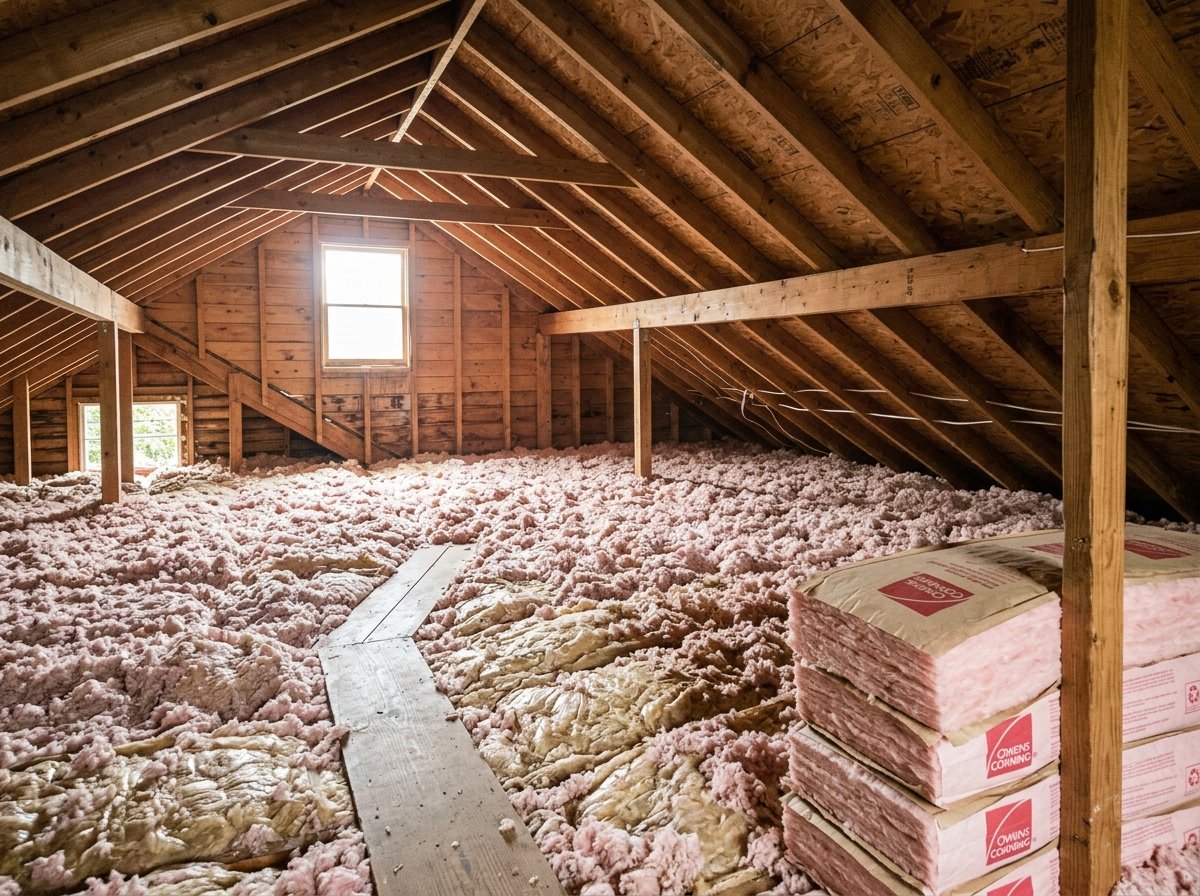
Vermont is expensive (~10% above the U.S. national average) for insulation projects in 2026. A typical mid-range insulation project for attic-insulation top-up (R-19 to R-49) on a 1,500-2,000 sq ft home, plus rim-joist sealing runs about $2,574–$5,005 in Vermont in 2026, including labor, materials, permits, and a 10% contingency. That single fact reshapes how you should run the bid process — in cheaper states a contractor can underbid by 15% and still make margin, while in expensive states the same 15% spread can hide either a great deal or a contractor cutting corners on prep work.
The bulk of the Vermont delta comes from insulation type (loose-fill cellulose vs blown-in fiberglass vs spray foam) and existing-insulation removal needs. These three line items move together — when one is high in a market, the others usually are too. That's the structural reason Vermont insulation prices don't simply track the national index by a flat percentage.
Why Vermont's climate matters for insulation costs
Vermont is a cold-climate state with a 5-7 month heating season, and that climate fact reshapes the insulation job in ways most homeowners miss until the bid arrives. Material choices that survive freeze-thaw cycles, scheduling around the build season, and code requirements written for cold-weather building all push costs above what a Sun Belt homeowner pays for the same scope.
Insulation work is year-round. Many utility rebates have annual budget caps — apply in Q1 or Q2 before they exhaust. Vermont-specific contractor availability shifts the math: in busy seasons (typically when the weather is good), the same crews quote 8-15% higher than they will quote in the slow shoulder months. Building your insulation project schedule around your state's slow season, not the calendar year's slow season, is one of the highest-ROI moves a homeowner can make.
Permit and code expectations for insulation work in Vermont
Vermont sits in the middle of the permit-overhead distribution. Most municipalities charge $250–$600 in permits with 2-4 week review windows, and code amendments are present but not aggressive. The insulation permit add-on here is real but predictable — budget it explicitly rather than rolling it into a contingency line.
Practical playbook for Vermont insulation permits: confirm the permit requirement with your specific municipality (cities and counties often diverge from state default), have the contractor pull the permit (so they carry liability for code compliance, not you), and ask for the inspector's punch list in writing after each inspection. If your contractor offers to "skip the permit and split the savings," walk away — the savings disappear the first time you try to sell the home.
How to run the bid process for a insulation project in Vermont
Bid spread — the gap between the highest and lowest bid you collect for the same scope — is the single best signal of whether you're getting a fair insulation price in Vermont. In an expensive state like Vermont, expect a 25-35% spread across three bids on identical scope. A tighter spread usually means you didn't write a tight enough scope; a wider spread usually means at least one bidder is either underbidding to win the job (and planning to come back with change orders) or padding for "Vermont taxes" that aren't real.
Always have the attic air-sealed before insulation goes in. Skipping air-sealing leaves 30-50% of the energy savings on the table. For Vermont specifically: verify each bidder's license status on the state contractor-licensing board (most state boards have a free online lookup), require proof of general-liability insurance ($1M minimum) and workers' comp, and ask for two recent insulation-job references — calls to actual recent clients catch more red flags than any online review system.
Insulation cost FAQs for Vermont
More cost guides for Vermont
Bathroom cost in Vermont
View rangesKitchen cost in Vermont
View rangesFlooring cost in Vermont
View rangesRoofing cost in Vermont
View rangesDeck cost in Vermont
View rangesBasement cost in Vermont
View rangesWindows cost in Vermont
View rangesSolar cost in Vermont
View rangesFence cost in Vermont
View rangesPool cost in Vermont
View rangesPainting cost in Vermont
View rangesHardscape cost in Vermont
View rangesLandscaping cost in Vermont
View rangesDoors cost in Vermont
View rangesHVAC cost in Vermont
View rangesFurnace cost in Vermont
View ranges