Kitchen Remodel
Best Time of Year to Remodel a Kitchen in 2026 (Seasonal Cost + Schedule Guide)
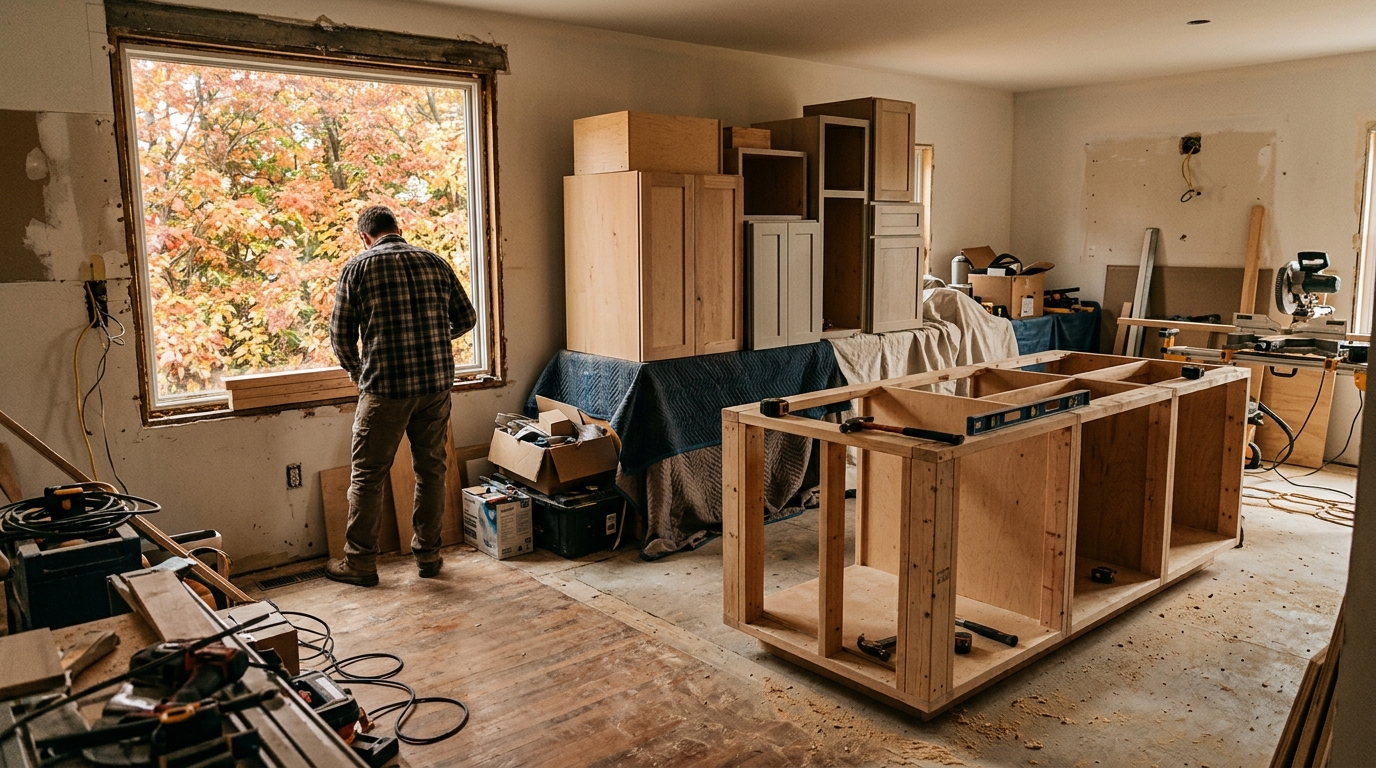
Short answer: Fall (September to early November) is the best time to remodel a kitchen in 2026. Contractors have post-summer availability, you'll dodge the summer rush premium, materials are in-stock, and you'll be done by Thanksgiving. Worst time: late spring (April-May) — peak demand, premium labor rates, longest lead times. Here's the full seasonal breakdown, why each window works (or doesn't), and how to time your project.
Quick-reference: best to worst time to start a kitchen remodel
- September - early November (fall): 🟢 Best. Post-summer crew availability, 5-10% labor discount vs. peak, finish by Thanksgiving.
- January - February (mid-winter): 🟢 Second best. Strong labor discount (10-15%), but permit delays + holiday slow-start can extend timelines.
- November - December (late fall): 🟡 Mixed. Good labor availability but holiday disruptions on both contractor and homeowner side.
- March: 🟡 Mid-tier. Demand ramping up; lead times growing.
- June - August (summer): 🔴 Most expensive. Peak demand, 5-15% labor premium, 4-8 week lead times on materials. Fast turnaround if you can pay for it.
- April - May (late spring): 🔴 Worst. All the demand premium of summer + slim contractor availability + longest material lead times.
Detailed seasonal breakdown
Fall (September - early November) — 🟢 Best window overall
Why it works: The summer rush is over, contractors have available crews, and material suppliers are well-stocked after summer ordering. Lead times shrink to 1-3 weeks for most cabinets and tile. Crews are motivated to book Q4 work to fill schedules through year-end.
- Cost vs. peak: 5-10% labor discount
- Typical lead times: 1-3 weeks for semi-custom cabinets, 1-2 weeks for tile
- Permit speed: Fast (no holiday backlog yet)
- Project finish: 4-6 weeks active = done by Thanksgiving
- Watch out for: Don't start after mid-November — you'll bump into Thanksgiving + Christmas and lose 2-3 weeks of construction time you didn't budget for.
Mid-winter (January - February) — 🟢 Second-best window
Why it works: The strongest labor discount available, often 10-15% below peak. Contractors compete hard for January-February work because their schedules empty out after Q4. Material suppliers offer year-end + winter clearance pricing.
- Cost vs. peak: 10-15% labor discount; 5-15% material discount on end-of-line items
- Typical lead times: 1-3 weeks (similar to fall)
- Permit speed: Can be slow in early January due to holiday backlog; normal by mid-January
- Project finish: 4-6 weeks = done by late February / early March
- Watch out for: January is the #1 month for material delays in cold-climate states (FedEx + UPS holiday hangover). Snow days can also pause work in CO, MN, WI, NY, MI.
Spring (March - May) — 🟡 to 🔴 Mid-tier to worst
Why people choose it: Tax refund just landed, daylight is growing, homeowners want to finish before summer entertaining. This is also exactly why everyone else does too.
- Cost vs. peak: Mid-March: at-peak. April-May: at-peak or slight premium
- Typical lead times: 3-6 weeks for cabinets, 2-4 weeks for tile (demand-driven)
- Permit speed: Slowing — most jurisdictions see 30% volume bump in April
- Why to avoid late spring: Material lead times stretch out, contractor crews are fully booked, and you'll pay the full peak premium without the speed advantage that drives summer pricing.
Summer (June - August) — 🔴 Most expensive but fastest
Why people choose it: Kids out of school = less family disruption from kitchen-offline pain. Long daylight hours = contractors can put in 11-hour days. Construction is not slowed by snow.
- Cost vs. peak: Peak — 5-15% premium over fall/winter pricing
- Typical lead times: 4-8 weeks for cabinets (worst of the year)
- Permit speed: Slow — peak volume in most jurisdictions
- Project finish: Fastest active construction, slowest total lifecycle due to long lead times
- Pay-for-speed scenarios: If you're remodeling for a fall move-in, summer is the only window. Otherwise, the premium isn't worth it.
The hidden factors most homeowners miss
Contractor schedule patterns
Most contractors run 3-6 month booking windows. To start a kitchen in October, sign the contract in July. To start in January, sign in October. The contractor calendar matters more than your calendar. Contractors who can start "next week" are usually a yellow flag — they have an opening for a reason.
Permit office calendars
Most permit offices see volume swings: spring 30% above baseline, fall 10% above, winter 10-20% below. A permit that takes 4 days in January takes 9 days in May in the same jurisdiction. If you're on a tight start-date, file the permit application 3-4 weeks before your target start.
Holiday disruptions (the silent timeline killer)
- Thanksgiving week: ~3 lost workdays. Contractors typically don't work Wednesday-Friday.
- Christmas + New Year: 7-12 lost workdays depending on calendar. Most contractors fully close shop from December 22 to January 5.
- July 4 week: 1-2 lost days.
- Memorial Day + Labor Day: 1 lost day each.
Adding 6+ weeks of active construction to a project means likely overlapping at least one holiday. Build that into your timeline upfront.
School calendar (if you have kids)
Kitchen offline for 4-6 weeks means takeout, microwave dinners, sandwich lunches. Summer (kids home all day) is harder than school year (kids gone 8 hours/day) IF you have school-aged kids who do dishes/snacking at home all day. School-year remodels are easier to manage despite the cost premium of post-school-start work.
Special cases — when timing matters less
- You're moving in 6 months and need it done. Pick the next available contractor; pay the premium. Speed beats discount.
- You have a flexible second kitchen or basement kitchenette. Disruption is minimal; pick the cheapest-labor window (Jan-Feb).
- You're paying cash and can pre-order everything. Lead times don't bind you; you can wait for whenever the contractor has a clean opening, no rush.
- You're remodeling a vacation/rental property: Off-season (when guests aren't there) trumps everything else.
How to actually time your project
- Pick your target finish date. Thanksgiving, summer entertaining, before a move, before a baby arrives — whatever it is.
- Subtract 5 weeks for active construction. That's your start date.
- Subtract 4-8 more weeks for material lead times. That's when you should be ordering materials.
- Subtract 2-3 more weeks for contractor bid + selection. That's when you should be calling contractors for bids.
- Add 15% buffer for surprises. Code remediation, permit delays, snowstorms.
For a Thanksgiving finish: start construction late September, order materials early September, bid contractors mid-August. For a summer finish: start construction late May, order materials mid-April, bid contractors mid-March.
Bottom line
Fall (September - early November) is the best window for most homeowners — you get post-summer crew availability, modest labor discount, fast lead times, and you're done by Thanksgiving. Mid-winter (January - February) is the strongest discount play if you can tolerate weather and holiday-tail timing risk. Summer is the most expensive but fastest, and works if your priority is hitting a fall finish. Spring is what to avoid — peak demand without the offsetting summer-speed benefit.
For state-specific kitchen remodel costs, run our kitchen cost calculator. For a deeper budget walkthrough, see is $30,000 enough for a kitchen remodel and how long a kitchen remodel takes. And our broader best time to renovate guide covers seasonality across all renovation types.
Get the kitchen remodel timing calendar
Email me the seasonal cost/schedule cheat sheet — best windows by month, holiday slowdowns, contractor booking patterns, and the back-planning formula.
Free. One email. Unsubscribe in one click. No spam.