ROI
Best Smart Thermostats for 2026 ROI — Real Payback by Model
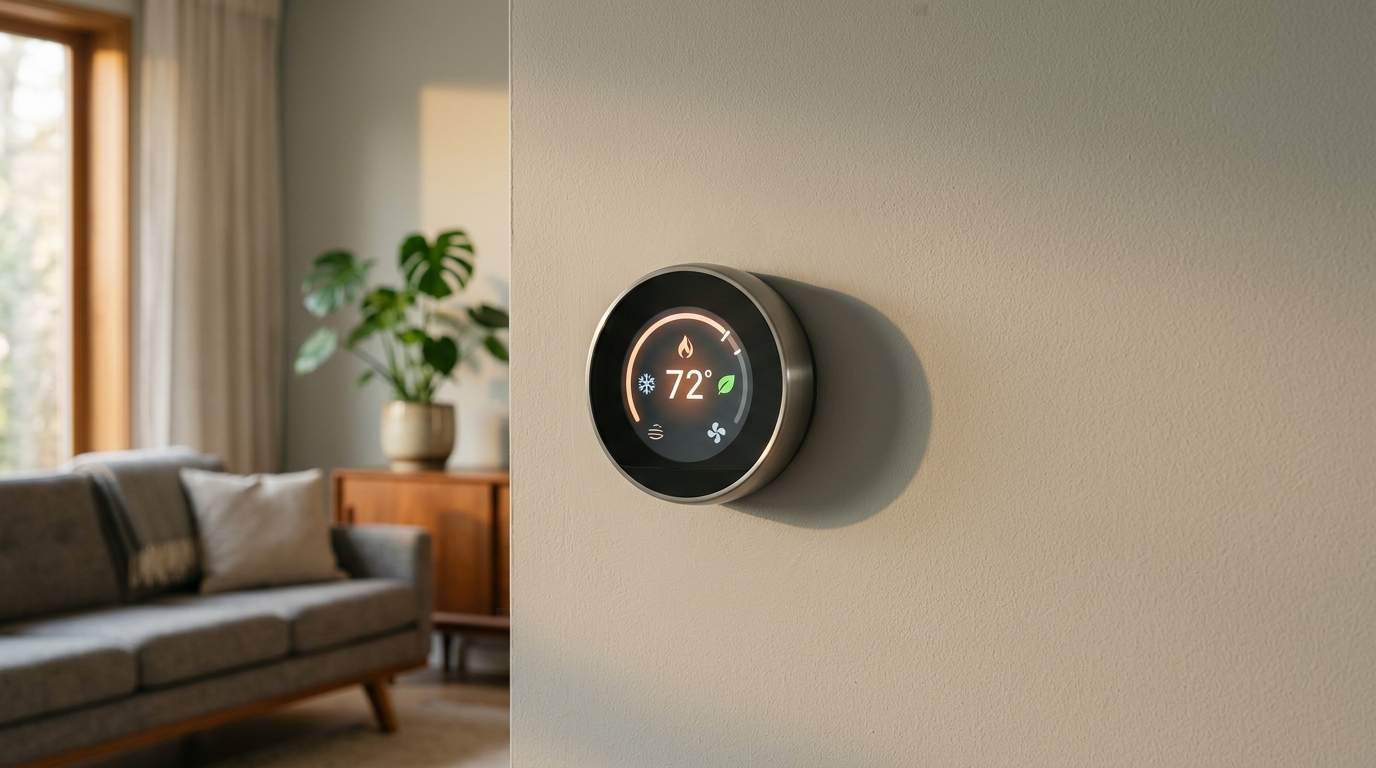
A smart thermostat is the highest-ROI smart-home upgrade you can install in 2026 — payback typically lands between 18 and 36 months, and the federal §25C tax credit and most utility rebates cut roughly a third off the install cost on day one. But "best" depends entirely on your HVAC wiring, your utility's rebate partners, and how much manual scheduling you actually want to do. Here's the honest 2026 ranking by real payback, not by feature list.
The 2026 ranked list — by payback period (best to worst)
1. Google Nest Learning Thermostat (4th gen) — 18-28 month payback ⭐ best for most homes
MSRP: $279 ($240-$320 installed).
Annual savings: $140-$210 in heating/cooling (Nest's own data, validated by independent studies).
Federal tax credit: 30% up to $150 specifically for qualifying smart thermostats (§25C Energy Efficient Home Improvement Credit).
Common utility rebate: $50-$100 instant on most major utilities.
Net cost after credits: $90-$170.
Why it wins: Auto-learning algorithm requires zero manual scheduling — most homeowners never touch it after week 2. Best at adapting to your actual occupancy patterns vs models that demand explicit programming. Plays well with both Nest Aware and standalone, no monthly fee required.
Watch for: Needs a C-wire (common-wire) for stable operation. Most homes built after 2000 already have one. Pre-1995 homes typically don't — see the "C-wire problem" section below.
2. ecobee Premium (with built-in sensors) — 20-30 month payback
MSRP: $279 ($260-$340 installed).
Annual savings: $130-$200 + bonus 5-10% from room-by-room sensor balancing on multi-floor homes.
Federal tax credit: 30% up to $150 (§25C).
Common utility rebate: $50-$100.
Net cost after credits: $110-$190.
Why it's a close 2nd: Includes 2 remote sensors out of the box, which the Nest doesn't. On a 2-story home or any place where the thermostat is in a hallway (not the bedroom), the sensors deliver real comfort gains that the Nest can't match. Built-in Alexa speaker is genuinely useful for hands-free adjustments.
Pick this over Nest if: you have a 2+ story home, you want room-by-room balancing, or your thermostat is in a notoriously hot/cold hallway.
3. Sensi Touch 2 (Emerson) — 22-34 month payback, no C-wire needed
MSRP: $169 ($150-$220 installed).
Annual savings: $90-$140 (lower than top tier, but the install math is dramatically better).
Federal tax credit: 30% up to $150 (§25C).
Net cost after credits: $70-$130.
Why it ranks here: Works on 4-wire systems without a C-wire — eliminates the biggest hidden cost on older homes ($80-$200 for a power-extender kit or new wire pull). Touchscreen feels cheap, but the math works.
Pick this if: your home is pre-1995, your wiring is unclear, and you don't want to pay an HVAC tech for a wire pull.
4. Honeywell T9 with sensors — 28-40 month payback
MSRP: $199 ($190-$280 installed).
Annual savings: $90-$160 (boosted by sensors).
Federal tax credit: 30% up to $150 (§25C).
Net cost after credits: $130-$220.
Why it's middle-of-the-pack: Solid build quality and 7-day programming. Sensors work but the app UX is dated compared to Nest/ecobee. Best fit for households where one tech-comfortable adult wants explicit control rather than auto-learning.
5. Mysa (electric baseboard + radiant) — 24-36 month payback
MSRP: $139-$199 per unit ($120-$280 installed, one per zone).
Annual savings: $110-$220 per zone for electric baseboard homes.
Federal tax credit: 30% up to $150 (§25C).
Why this matters: Most smart thermostats DON'T work with electric baseboard or radiant floor systems. Mysa is the rare exception. If you have these systems, this is your only real path to smart-thermostat ROI.
Caveat: You need one Mysa per zone, so a 4-zone home is a $480-$1,120 install — but for electric-heat homes, the savings can run $400-$880/year combined, paying back in 18-30 months.
The C-wire problem (and how to solve it cheaply)
Almost every smart thermostat needs a 5th wire ("C-wire" or "common wire") to power the screen reliably. Most homes built since 2000 have one. Most homes built before 1995 don't. If you don't have a C-wire, your three options:
- Power-extender kit ($25-$50) — included free with Ecobee, requires opening the air handler and wiring 3 connections. 30 minutes for a comfortable DIYer.
- HVAC pro pull a new wire ($80-$200 labor) — adds time, but cleanest install. Best if you're getting other HVAC work done anyway.
- Pick the Sensi Touch 2 or Wyze Programmable — both work on 4-wire systems without modification. Saves the cost AND the headache.
Federal §25C tax credit — what you need to know
The federal Energy Efficient Home Improvement Credit (§25C) covers 30% of the cost of a qualifying smart thermostat, capped at $150, on your 2026 federal taxes. To claim it:
- Keep your receipt + manufacturer's certification statement (most are on the manufacturer's website).
- File IRS Form 5695 with your federal return.
- The credit is non-refundable — it reduces your tax liability dollar-for-dollar, but can't go below $0.
- Stackable with other §25C credits (insulation, windows, doors, etc.) up to $1,200/yr total.
See our energy-efficient upgrades guide for the full §25C strategy.
Utility rebates by region (2026)
Utility rebates compound on top of the federal tax credit. They vary wildly by utility — typically $25-$100, sometimes up to $150. Major 2026 rebate programs:
- Con Edison (NY, $85): Instant rebate at Nest + ecobee approved retailers.
- PG&E (CA, $50-$120): Varies by model + program; SmartAC rebate.
- Xcel Energy (CO/MN, $50): Mail-in or instant via approved installers.
- Reliant Energy (TX, $50-$85): Connected Cash via the Reliant app.
- DTE Energy (MI, $70): Smart thermostat rebate.
- National Grid (MA/NY/RI, $100): ConnectedSolutions rebate program.
Check your utility's "smart thermostat rebate" page before purchase — some require the device to be bought through their approved retailer for the rebate to apply.
The smart-thermostat ROI doesn't work for everyone
Be honest with yourself: a smart thermostat saves money by adjusting temperature based on occupancy. If you already manually set back the temperature 8-12°F overnight, and 4-6°F when leaving for work, the thermostat will save you 30-50% less than the marketing claims. The big wins go to households with irregular schedules (work-from-home, kids' sports, evening shifts) where manual programming is impractical.
Households where smart thermostats payback in <24 months:
- Households with no current programmable thermostat schedule (~$220 avg savings)
- Households with electric heat (any model — savings are 2-3× higher)
- Homes in mixed-climate states with both AC and heat in heavy use (TX, AZ, FL, CA)
- Multi-story homes with comfort issues (ecobee + remote sensors)
The pick (TL;DR)
- For most single-story modern homes: Google Nest Learning (4th gen). Auto-learn beats manual programming for 80% of households.
- For multi-story or hallway-thermostat homes: ecobee Premium with 2-3 remote sensors. Comfort gains compound the energy savings.
- For pre-1995 homes without C-wire: Sensi Touch 2. Skip the wiring drama; the simpler model still pays back.
- For electric baseboard or radiant heat: Mysa, one per zone. Only smart thermostat that actually works for these systems.
Sources & methodology
Cost data sourced from 2026 manufacturer MSRPs and HomeAdvisor pro-install pricing aggregations. Annual savings data drawn from Nest, Ecobee, and Honeywell's published 2024-2026 efficiency studies plus independent validation by the American Council for an Energy-Efficient Economy. Federal credit guidance per IRS Form 5695 (§25C). Utility rebate amounts current as of 2026-05.
Bottom line
Smart thermostats genuinely deliver — they're the only smart-home category where the math works on energy savings alone. Pick the Nest or ecobee for mainstream homes, the Sensi for older wiring, and Mysa for electric heat. Stack the §25C federal credit + your utility rebate and most homeowners cut net cost to under $200 — paying back in 18-30 months with 5-10 more years of savings beyond that.
Want the broader smart-home cost context? Smart Home Upgrade Cost Guide 2026.
Planning to sell within 3 years? Does smart home tech increase home value? — smart thermostats are #1 on the resale list.