Energy & Efficiency
Energy-Efficient Upgrades Worth the Money in 2026 (And the 4 That Aren't)
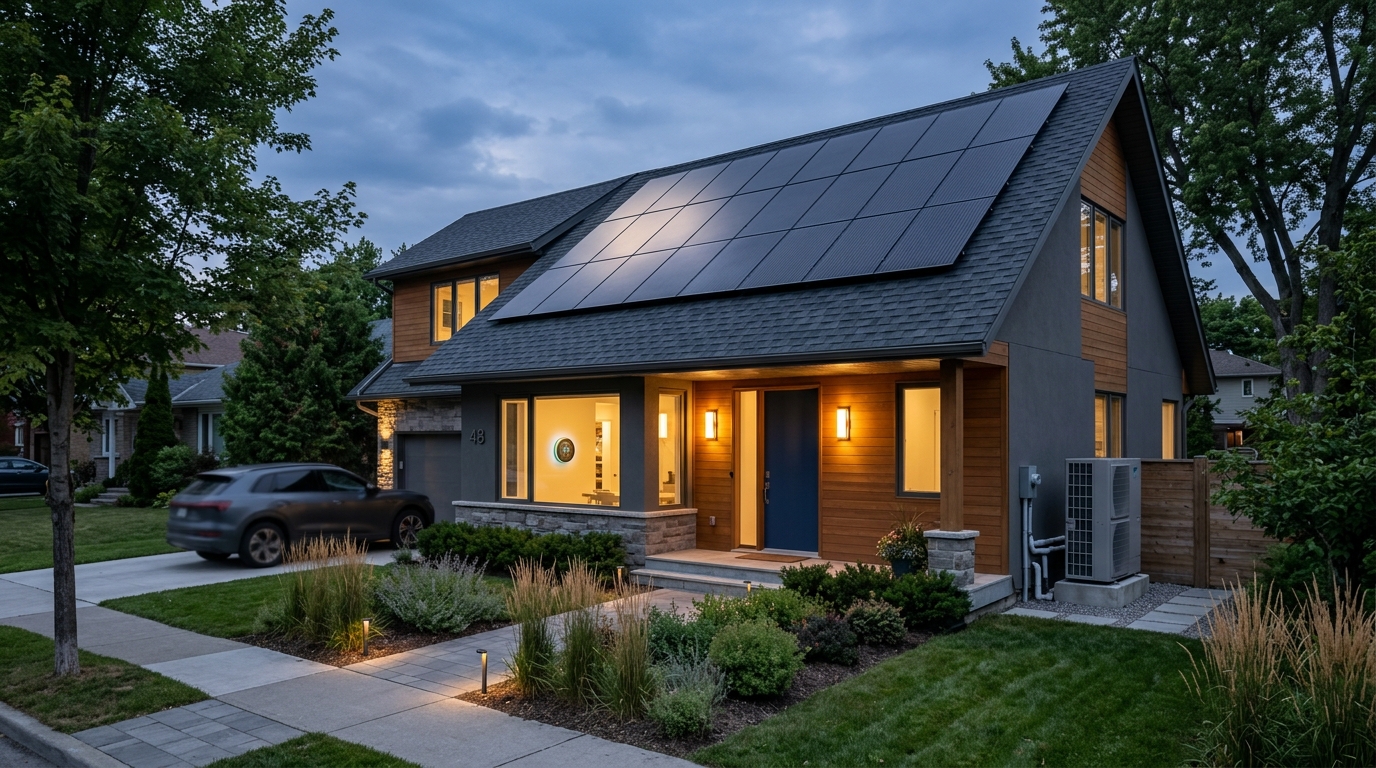
Every renovation magazine in 2026 is selling you "energy efficiency." Most of those upgrades pay back in 15+ years — i.e., you'll move before you break even. Others quietly pay back in 3–5 years and almost no one talks about them. Here's the honest ranking, with 2026 prices, real payback periods, and the federal tax credits + state rebates that change the math.
The 2026 ranked list — by payback period (best to worst)
1. Attic insulation top-up — 2-4 year payback ⭐ best in class
Cost: $1,500–$3,200 for an average 1,500 sqft attic to R-49 (the 2026 DOE recommendation for most of the U.S.).
Annual savings: $400–$700 in heating/cooling.
Federal tax credit: 30% up to $1,200 (Energy Efficient Home Improvement Credit, §25C).
Why it wins: Lowest cost-per-dollar-saved of any upgrade. Most homes are under-insulated by 30–50%. Quick install (1 day), zero disruption, immediately measurable on your next utility bill.
2. Smart thermostat — 1-2 year payback ⭐
Cost: $180–$320 installed.
Annual savings: $130–$220 (8–12% off heating/cooling).
Why it wins: Cheapest entry-level upgrade with real measurable savings. Geo-fencing, learning algorithms, and remote control eliminate the "I left the AC on all day" tax. Many utility companies rebate $50–$100 on installation.
3. Air sealing (weatherstripping, caulk, door sweeps) — 1-3 year payback ⭐
Cost: $250–$900 DIY; $1,200–$2,800 professional blower-door test + seal.
Annual savings: $200–$400.
Why it wins: Most homes leak 20–30% of conditioned air. Fixing the leaks costs less than a weekend at the lake. Pair with attic insulation for compounding gains.
4. Heat pump (mini-split or whole-home) — 5-8 year payback
Cost: $4,500 (single mini-split) to $14,000+ (whole-home ducted).
Annual savings: $700–$1,500 vs. baseboard electric heat, $300–$700 vs. gas furnace.
Federal tax credit: 30% up to $2,000 (§25C).
State rebates: $4,000–$8,000 in Massachusetts, New York, California, Oregon, Washington, Vermont, and most New England states through HOMES/HEEHRA programs.
Why it works: When stacked with federal + state incentives, net cost often drops to $2,000–$4,000 with 5-year payback. Cold-climate heat pumps now work down to -13°F.
5. LED retrofit (whole-home) — 1-2 year payback
Cost: $300–$800 for an average home's fixtures + bulbs.
Annual savings: $150–$300.
Why it works: If you still have any incandescent or halogen bulbs in 2026, you're burning money. LED replacement is the lowest-friction upgrade in this list — change a bulb, save $4/year per fixture forever.
6. Heat-pump water heater — 4-7 year payback
Cost: $2,000–$3,800 installed (vs. $1,000–$1,800 for a standard electric tank).
Annual savings: $250–$500 vs. standard electric, $80–$200 vs. gas.
Federal tax credit: 30% up to $2,000 (§25C).
State rebates: $1,200–$3,500 in HEEHRA-participating states.
Why it works: 2-3x more efficient than a standard electric water heater. Net cost after credits often beats a standard install.
7. Solar panels — 7-11 year payback (depends heavily on state)
Cost: $14,000–$24,000 for a typical 8 kW system pre-incentives.
Federal tax credit: 30% (§25D, Residential Clean Energy Credit) — no cap.
State incentives: Vary wildly. California (NEM 3.0), New Jersey, Massachusetts, and New York still have strong net-metering or SREC programs; many states have weakened them.
Why it's split: In CA, MA, NJ, NY → 7-9 year payback. In FL, TX, NC, GA → 9-12 years. In states with poor net metering (KY, AL, MS) → 13+ years. Run the math for your specific state before signing.
Read our deeper analysis on whether solar is worth it in 2026.
8. Window replacement (double-pane to triple-pane) — 12-22 year payback ⚠️
Cost: $8,000–$22,000 for a 10-window home.
Annual savings: $200–$450 — far less than the brochure claims.
Federal tax credit: 30% up to $600 (§25C).
Reality check: Replacing functional double-pane windows for energy savings alone is the worst payback in this list. Replace when windows are broken, leaking, or you're renovating anyway — never for energy reasons alone. See window replacement materials compared.
The 4 upgrades that aren't worth the money in 2026
❌ Solar shingles (Tesla Solar Roof, GAF Timberline Solar)
$50,000–$80,000 installed. 2-3x the cost of traditional solar panels for similar output. Payback period 15-22 years even with the 30% federal credit. Worth it only if you needed a new roof anyway AND want the aesthetic AND live in a high-incentive state. For 95% of homeowners, traditional panels on an existing roof are 60-70% cheaper for the same generation.
❌ "Smart" appliances marketed as energy savers
A smart fridge is not measurably more efficient than a non-smart Energy Star fridge of the same size and compressor type. The "smart" features cost $300–$800 extra and save maybe $5/year. Buy on price + Energy Star certification, not WiFi.
❌ Whole-house battery (without solar)
$12,000–$18,000 installed. Without solar generation feeding it, you're essentially buying $20,000 of backup power. Payback period from energy savings alone: never. Only makes sense paired with solar OR if you live somewhere with frequent multi-day outages AND time-of-use electric rates.
❌ Replacing a working gas furnace with a heat pump in a cold climate alone
If your existing gas furnace has >5 years of life left and you live in a heating-dominant cold climate (MN, ND, ME, VT), replacing it solely for efficiency rarely pays back. Wait until it dies, then go heat pump. Caveat: if you have rooftop solar + cheap electricity, the math flips and it's worth it.
How to stack federal + state + utility incentives in 2026
The Inflation Reduction Act (IRA) created two main federal pathways still in effect through 2032:
- §25C Energy Efficient Home Improvement Credit: 30% credit, capped at $3,200/year total. Reset every year — so spread big projects across two tax years if you can. Covers insulation, windows, doors, heat pumps, heat-pump water heaters, electrical panel upgrades.
- §25D Residential Clean Energy Credit: 30% credit, no cap. Covers solar PV, solar thermal, geothermal, battery storage (when installed with solar).
- HOMES + HEEHRA rebates: Income-based rebates of $2,000–$14,000+ for low and moderate-income households. Run through state energy offices — check yours at energy.gov/save.
- Utility rebates: Local utilities offer $50–$3,000 instant rebates on smart thermostats, heat pumps, water heaters, insulation. Ask your utility's "rebate program" page before buying.
Stack order matters. Utility rebate usually comes off the price first, then the federal tax credit applies to the post-rebate amount. Get this in writing from your contractor.
The 2026 efficiency ladder (do these in this order)
- Air seal + attic insulation ($1,800–$4,500 total). Highest ROI, prerequisite for everything below.
- LED retrofit + smart thermostat ($500–$1,200 total). Quick win, 1-2 year payback.
- Energy audit ($300–$600). Many utilities offer free audits. Identifies your home's specific weak points.
- Heat-pump water heater if your current one is >8 years old.
- Heat pump HVAC when your current system fails (or earlier if rebates make it free-after-incentives).
- Solar PV if you live in a strong-incentive state and own your roof for ≥7 more years.
- Battery storage only after solar is installed AND only if your state has time-of-use rates or grid outages.
Want to run the numbers on a specific project?
- Solar panel cost — state-adjusted with current incentives
- Window replacement cost
- Roof replacement cost — relevant if you're considering solar shingles
- Basement finishing cost — includes insulation upgrades
Sources: Department of Energy 2026 Home Energy Saver baseline data, IRS guidance on §25C and §25D credits (revised Jan 2026), DSIRE state incentive database (updated quarterly), HOMES/HEEHRA program rollout data from state energy offices, ENERGY STAR product certification database. Payback estimates assume national-average electricity rates of $0.166/kWh and gas rates of $1.42/therm; adjust for your local utility.