Bathroom Remodel
How Much Does It Cost to Add a Bathroom in 2026?
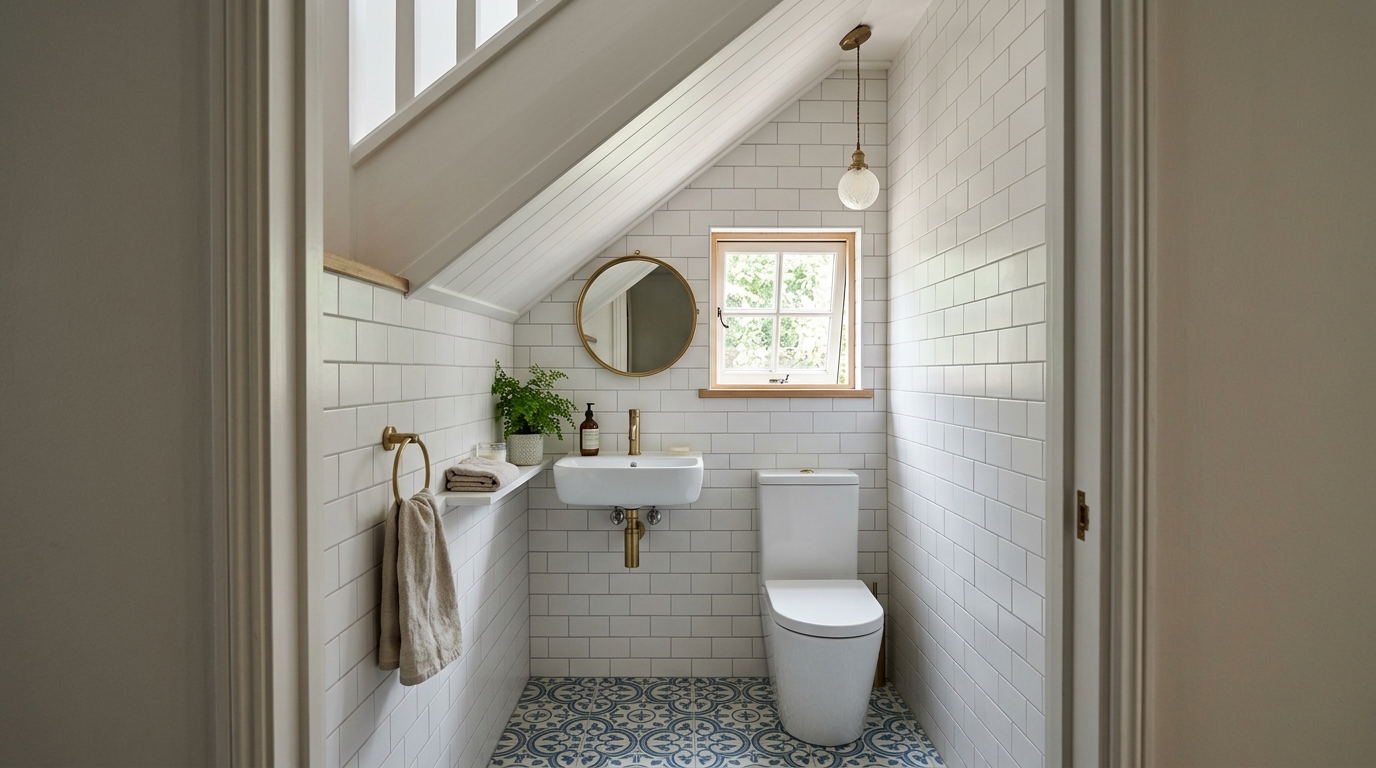
Short answer: adding a bathroom in 2026 costs $18,000 to $95,000, depending almost entirely on whether you're (a) converting existing finished space, (b) carving from unfinished space, or (c) building a brand-new addition. The plumbing alone is 30-50% of the total — and the single decision that drives plumbing cost is where your existing drain stack is. Here's exactly what it costs in each scenario and the 6 plumbing decisions that swing the price.
The 3 ways to add a bathroom (and what each costs)
- Type A — Convert existing finished space (e.g., a closet, a corner of a bedroom, a section of a hallway): $18,000-$30,000. The cheapest option, but only viable if you're within ~10 feet of an existing drain stack and the floor joists can take the load.
- Type B — Finish unfinished interior space (basement bathroom, attic bathroom, garage conversion): $15,000-$28,000 for a basement, $25,000-$42,000 for attic. Basements are cheapest because the slab is already there; attics are pricier due to access, joist reinforcement, and a typical need for a sewage ejector pump.
- Type C — Add a bathroom to an existing room footprint (carve a primary en suite from an oversized bedroom, add a powder room near the kitchen): $32,000-$58,000. You're building walls, running new plumbing supply + drain, and adding electrical/HVAC.
- Type D — Bump-out or addition (new exterior walls + foundation extension): $52,000-$95,000. The most expensive — you're paying for a foundation, roof, exterior walls, AND the bathroom itself.
Costs are mid-tier finish, ~5x8 to ~8x10 sqft bathroom, national average. Adjust for your state with our bathroom cost calculator. California, New York, Hawaii: +30-50%. Mississippi, Arkansas, West Virginia: −12-16%.
Where does the money actually go?
For a typical Type C addition (~$45K mid-tier 5x8 powder room or 8x10 full bath):
- Plumbing (rough-in + finish): $9,000-$16,000 — depends almost entirely on drain-stack distance and whether you need an ejector pump.
- Electrical (new circuits, GFCI, exhaust fan, lighting): $2,500-$5,000.
- HVAC (new register or mini-split): $1,500-$3,800.
- Framing + drywall + insulation: $3,500-$7,500.
- Flooring (tile + waterproof underlayment): $2,500-$5,500.
- Tile work (shower surround + wall tile): $4,500-$11,000.
- Fixtures (toilet, vanity, sink, faucet, shower valve): $2,500-$8,500.
- Shower / tub (custom tile shower or pre-fab): $3,500-$8,500.
- Permits + inspections: $600-$2,400.
- Contractor overhead + profit (15-25%): $5,500-$10,500.
The 6 plumbing decisions that swing the price
- How far is the existing drain stack? Within 10 feet: $0 extra. 10-25 feet: +$2,000-$4,000 to extend. More than 25 feet, OR going up/down a story: +$4,000-$9,000 and you may need a new vent stack. The single biggest swing factor.
- Is the new bathroom below your home's main sewer line? If yes (almost always true for basement bathrooms), you need a sewage ejector pump: +$1,400-$3,500. Or a more reliable upflush macerator (Saniflo / Liberty Pumps): +$1,800-$3,200. The ejector pump is mandatory for any basement bathroom whose plumbing exits above the floor level.
- Are you running new water supply lines from the main? Adds $800-$2,500. Significantly cheaper if you can tap an existing nearby line.
- Tub or shower (or both)? Walk-in shower: $3,000-$5,500. Tub + shower surround: $2,500-$6,000. Custom tile shower with bench/niche: $5,500-$11,000. Soaker tub: add $1,200-$3,500 over a basic tub.
- Single sink or double vanity? Going from single to double sink adds $1,200-$3,000 (more plumbing + more vanity + more counter), and almost always requires the bathroom to be at least 7 feet wide.
- Are you keeping the existing floor framing or reinforcing it? A heavy tile floor + soaking tub + tile walls weighs 600-900 lbs/sqft. Pre-1990s floor joists often need sistering ($1,200-$3,500) before that load is code-legal.
Powder room vs. full bath vs. primary suite — cost reality check
- Half bath (powder room — toilet + sink only): $14,000-$25,000.
- Three-quarter bath (toilet + sink + shower): $22,000-$42,000.
- Full bath (toilet + sink + tub + shower): $28,000-$58,000.
- Primary en suite bath (8x12+, double vanity, separate tub + shower): $42,000-$95,000.
- Primary suite addition (bedroom + bathroom new build): $145,000-$320,000.
Where to put the new bathroom (best to worst, by cost)
- Closet directly back-to-back with an existing bathroom — share the drain stack, share the wall, cheapest plumbing.
- Closet or hallway above an existing bathroom (stacked plumbing) — drop drains straight down.
- Existing basement near the main sewer line — slab cut + ejector pump if needed.
- Existing bedroom corner — moderate plumbing run.
- Bonus room / attic / detached space — long plumbing runs, often need ejector pump and venting.
- Bump-out addition — most expensive: foundation, exterior walls, roof, AND the bathroom itself.
Permits, codes, and the inspections you'll need
Any new bathroom in 2026 requires permits in every U.S. jurisdiction. Expect 3-5 inspections: rough-in plumbing, rough-in electrical, framing, insulation/drywall, and final. Common code requirements that surprise homeowners:
- GFCI on every outlet within 6 feet of a sink.
- Bathroom exhaust fan rated for ≥50 CFM ducted to exterior (not the attic).
- Tempered glass on any shower door + windows within 60 inches of the tub.
- Anti-scald valve on the shower (limits hot water to 120°F).
- Minimum 21 inches in front of toilet, 15 inches from toilet centerline to any wall.
- P-trap and venting on every drain (no exceptions).
See our permit requirements by state guide for state-specific permit cost ranges.
Does adding a bathroom add resale value?
Yes — bathrooms are the second-most ROI-positive renovation after kitchens. From the 2026 Cost vs. Value data:
- Going from 1 → 2 bathrooms: the biggest value jump — often +$25K-$45K on resale in most markets. Many buyers won't consider a 1-bath home at all.
- Going from 2 → 3 bathrooms: +$15K-$25K typical.
- Going from 3 → 4 bathrooms: +$8K-$15K — diminishing returns.
- Primary en suite addition: +$30K-$70K depending on home value tier and market.
See "what does a bathroom remodel add to home value" for full state-by-state ROI breakdown.
The 4 biggest "I wish I'd known" mistakes
- Skipping the ejector pump for a basement bathroom. Without it, you'll get repeated drain backups. Pay the $1,400-$3,500 upfront.
- Cheaping out on the exhaust fan. A $80 builder-grade fan vs. a $250 variable-speed fan is the difference between "mold in the ceiling within 3 years" and "no mold for 15+ years."
- Not waterproofing behind the tile correctly. A failed shower-surround waterproofing detail is the #1 cause of premature bathroom failure. Hire a tile setter who uses Schluter Kerdi or RedGard membrane — both add $400-$900 and pay back 50:1 in longevity.
- Underplanning the electrical. Bathrooms need their own 20-amp GFCI circuit. Trying to add a steam shower or heated floor later means re-running cable. Plan the heated floor and have the electrician install it during rough-in (+$1,200-$2,200 vs. +$3,500-$5,500 retrofit).
Bottom line
Adding a bathroom in 2026 costs $18K-$30K if you can convert existing space near a drain stack, $32K-$58K for a typical interior addition, and $52K-$95K for a bump-out addition. The single biggest cost driver isn't fixtures — it's plumbing distance to your existing drain stack. Before you commit, walk the proposed location with a plumber for 30 minutes; most plumbers will do this for $0-$150 and tell you exactly which scenario you're in. Then run our bathroom calculator with your state for the actual budget number. If you're considering adding a basement bathroom specifically, see our deep-dive on adding a bathroom in the basement.
Get the bathroom-addition feasibility checklist
Email me the 12-item walk-through to do BEFORE you call a plumber — checks drain stack location, floor joist span, electrical capacity, and the 3 layout choices that double cost.
Free. One email. Unsubscribe in one click. No spam.