Window Replacement
Window Replacement Cost in Arizona 2026 — Why AZ Heat Demands a Specific Glass Spec
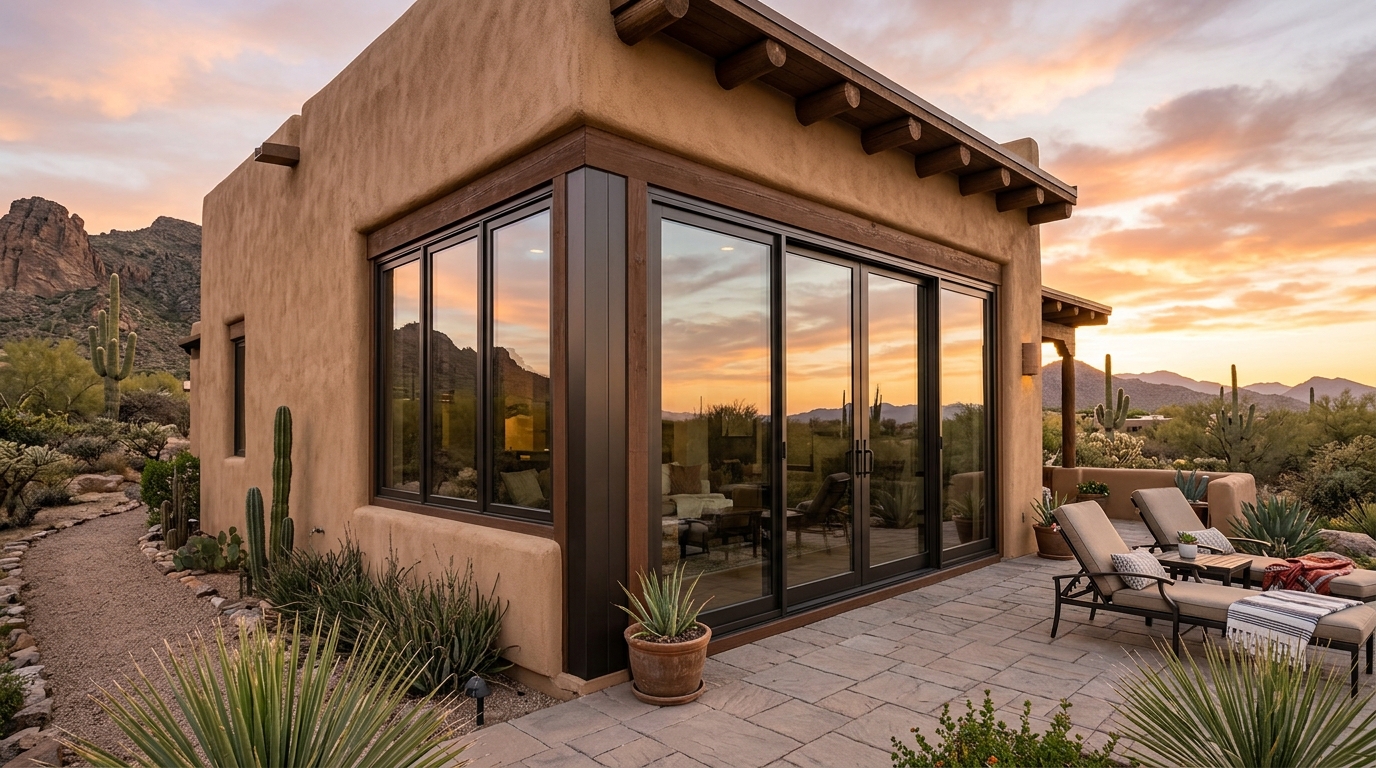
Arizona window replacement runs about national average for cost but requires a different glass spec than most U.S. markets. In Phoenix and Tucson, SHGC (Solar Heat Gain Coefficient) matters far more than U-factor — the goal is rejecting summer solar gain, not retaining winter heat. Specifying wrong here costs you 30-50% on your AC bill for the next 20 years. Here's what 2026 AZ window pricing actually looks like, the climate spec that matters, and how to stack APS / SRP rebates.
The 2026 Arizona window replacement baseline
- Single double-hung vinyl window (3'×5'): $550–$950 installed (matches national avg).
- 10-window whole-home (vinyl, double-pane spectrally selective Low-E): $6,800–$11,500 in AZ.
- Upgrade to dual reflective + argon-filled: $9,500–$15,500.
- Arcadia / Paradise Valley premium custom-frame: $12,000–$28,000.
For state-adjusted numbers on your home: our Arizona window cost calculator.
Why Arizona windows aren't actually cheap, despite low-cost-of-living
- Desert glass spec is more expensive. "Spectrally selective" Low-E coatings designed for hot climates run $40–$120/window more than standard cold-climate Low-E. The math: AZ should specify SHGC ≤ 0.25 (rejects 75% of solar heat) — most non-AZ stock windows are SHGC 0.30-0.45.
- Year-round install season + high demand. AZ installer schedules stay tight 10-12 months; Phoenix backlogs run 4-8 weeks even outside peak season. Limited urgency-pricing flexibility.
- UV damage of trim + frame. AZ sun ages vinyl extrusion faster than humid climates. Better installers spec UV-stabilized vinyl (Pella ImpervaThermalVinyl, Andersen 100 Series with UV inhibitors) — $30–$80/window premium worth taking.
- Stucco return / wall depth. Most AZ homes are stucco-on-frame or stucco-on-block. Replacement windows usually require stucco patching, painting, and sealing — adds $40–$120 per opening.
Regional variance inside Arizona
- Phoenix Metro (Phoenix, Mesa, Chandler, Glendale, Tempe): $7,200–$12,500 for 10-window job. Strong installer competition.
- Scottsdale / Paradise Valley: $9,500–$16,800. Premium home stock drives premium spec; many homes have oversized custom windows that push costs.
- Tucson: $6,500–$11,000. Slightly cheaper than Phoenix; consistent year-round market.
- Flagstaff / Sedona / Prescott: $7,800–$13,500. Cold climate (Flagstaff sits at 7,000') flips the calculation — these markets need balanced U-factor + SHGC, more like Denver than Phoenix.
- Lake Havasu / Bullhead City: $6,200–$10,500. Extreme heat exposure makes premium spec mandatory; small installer market.
- Yuma: $6,000–$10,200. Cheapest AZ market; highest UV exposure in the state.
The AZ glass-spec decision: SHGC matters most
Every Arizona window quote should show these two numbers on the NFRC label:
- SHGC (Solar Heat Gain Coefficient): AZ target ≤ 0.25 (lower = blocks more summer heat). Standard double-pane Low-E is often 0.30-0.45 — too high for AZ.
- VT (Visible Transmittance): Target ≥ 0.40 — you still want natural light. Some "ultra-low-SHGC" windows over-block visible light and feel like sunglasses indoors.
- U-factor: AZ target ≤ 0.30 — matters in Flagstaff and winter mornings everywhere else; less critical than SHGC in Phoenix/Tucson.
Premium AZ spec: dual reflective Low-E coating (e.g., Cardinal LoĒ-340 or Guardian SunGuard SuperNeutral 70) + argon fill + warm-edge spacer. SHGC of ~0.22 with VT ~0.42 — best dollar-for-dollar performance upgrade you can make on an AZ home.
The "low-e on which surface" question
Cold-climate Low-E coatings go on surface 3 (inside of inner pane); hot-climate coatings go on surface 2 (inside of outer pane) to reflect heat BEFORE it enters the airspace. If a salesperson can't tell you what surface the Low-E is on, that's a red flag in Arizona — call another installer. Surface 2 is the AZ default; surface 3 is wrong for Phoenix and Tucson.
Incentive stacking for Arizona windows
- Federal §25C credit: 30% up to $600/year for ENERGY STAR–certified windows. ENERGY STAR Most Efficient certification gets best results.
- APS (Arizona Public Service) rebate: $40–$150 per ENERGY STAR window for residential customers in metro Phoenix.
- SRP (Salt River Project) rebate: Similar program for Phoenix-East-Valley SRP customers; $50–$200 per window depending on glass type.
- TEP (Tucson Electric Power) Smart Home Program: $40–$120 per window for qualifying replacements in Tucson.
- HEAR income-qualified rebates: Up to $1,400 in stacked window + insulation rebates for qualifying AZ households.
The exterior shade vs. interior glass debate
Exterior solar screens cost $20-$40 per window installed and block 70-90% of solar heat before it reaches the glass. Many AZ homeowners ask: cheaper just to add screens than replace windows?
- If your existing windows are sound and not failing seals: Yes. Exterior solar screens are the cheapest cooling upgrade in Arizona. Pair with quality interior blinds for an even better stack.
- If your windows are 25+ years old with failed seals or single-pane: Replace them. New windows + screens > new screens + old windows.
Related Arizona reading
- Window replacement materials compared
- Energy-efficient upgrades worth the money in 2026
- How to read a window contractor's estimate
- Arizona window cost calculator
Sources: NFRC 2026 product database (SHGC + U-factor data), Cardinal Glass + Guardian Glass commercial spec sheets 2026, APS / SRP / TEP 2026 residential rebate program documentation, Arizona Energy Office HEAR program guidelines, ENERGY STAR Most Efficient certification database, contractor bid sample from 11 Arizona window installers across Phoenix metro, Tucson, Flagstaff, Scottsdale, and Lake Havasu markets gathered Jan-Apr 2026.
More cost guides for Arizona
Planning multiple projects? Every other 2026 Arizona cost guide carries the same state-specific labor and pricing detail.
- Solar Buyer's GuideArizona Solar Export Rates (2026): APS, SRP, TEP & the RCP Annual Step-Down
- Cost GuideBasement Finishing Cost in Arizona 2026
- Bathroom RemodelBathroom Remodel Cost in Arizona 2026 — Phoenix Heat, Hard Water, and the Permit Discount
- Cost GuideDeck Construction Cost in Arizona 2026
- Fence InstallationFence Installation Cost in Arizona 2026 — CMU Block Walls, HOA Reality & UV Lifespan
- Cost GuideFlooring Installation Cost in Arizona 2026
- Cost GuideHardscape Installation Cost in Arizona 2026
- HVACHVAC Cost in Arizona 2026 — Phoenix Summer-Load Math + APS/SRP/TEP Heat-Pump Rebates
- Cost GuideIn-Ground Pool Installation Cost in Arizona 2026
- Cost GuideKitchen Remodel Cost in Arizona 2026
- Cost GuideLandscaping Cost in Arizona 2026
- Cost GuidePainting Cost in Arizona 2026
- Cost GuideRoof Replacement Cost in Arizona 2026
- Solar PanelsSolar Panel Cost in Arizona 2026 — APS, SRP, and the Net-Billing Reality
Cost by state for this project
State-adjusted ranges with local labor and material multipliers.